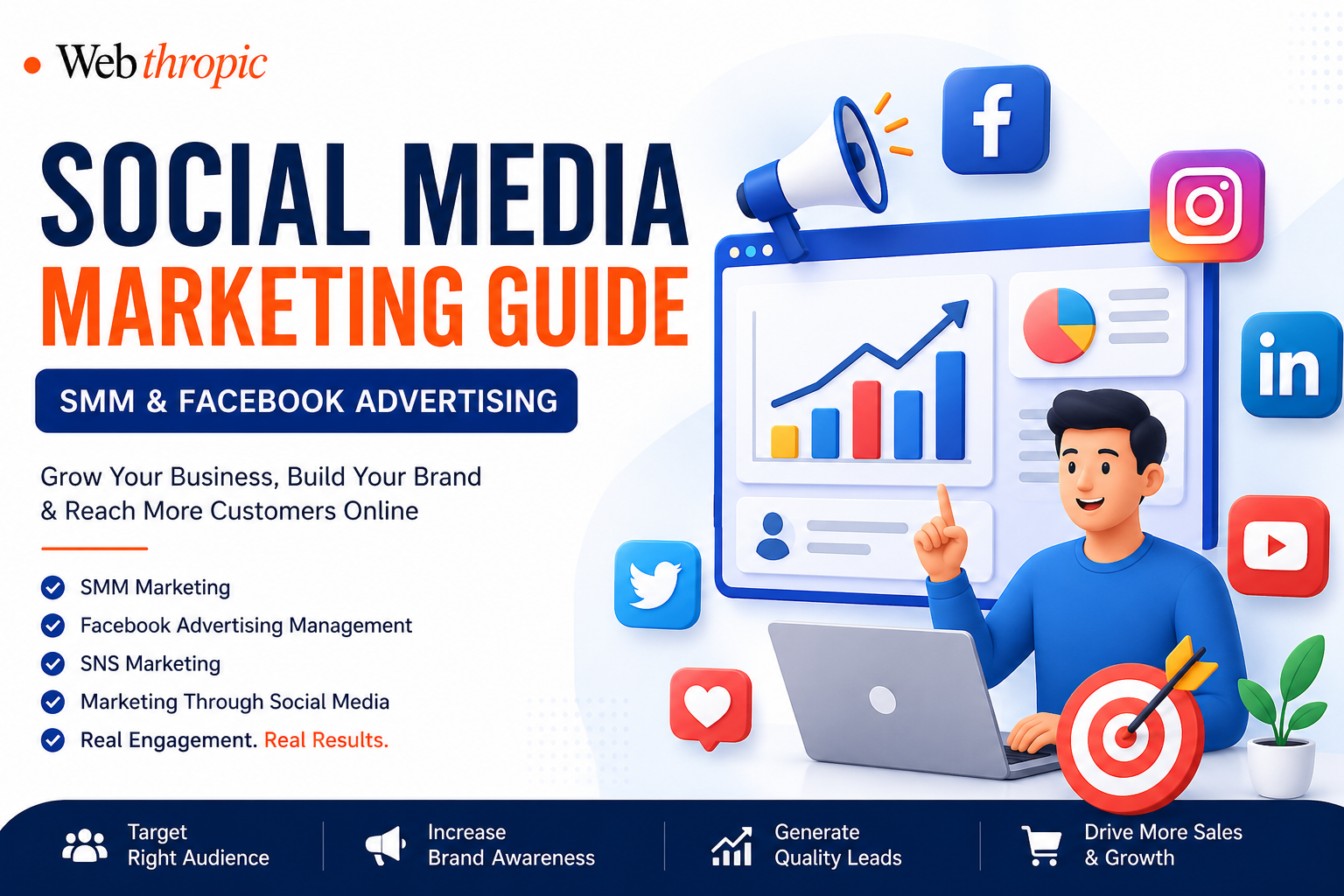
Advantages and Disadvantages of Social Media | Pros and Cons | Social Media Marketing Guide
Discover the biggest advantages and disadvantages of social media for businesses, students, marketers, and website owners. Learn how social media and professional website development work together to grow your brand.

The advantages and disadvantages of social media have become one of the most discussed topics for businesses, marketers, students, and individuals. Today, social media platforms are no longer just communication tools—they have become powerful business assets for brand awareness, customer engagement, lead generation, and website traffic.
Whether you're a startup, local business, or enterprise, understanding the benefits and drawbacks of social media helps you create an effective digital strategy while avoiding common mistakes.
In this guide, we'll explore the major pros and cons of social media, how they affect businesses, and how combining social media with professional website development can maximize your online success.
What is Social Media?
Social media refers to digital platforms where people create, share, and interact with content. Popular platforms include:
- X (Twitter)
- YouTube
- TikTok
Businesses use these platforms for marketing, customer service, advertising, community building, and brand promotion.
10 Advantages and Disadvantages of Social Media
Top 10 Advantages
1. Increases Brand Awareness
One of the biggest advantages of social media is reaching thousands or even millions of potential customers without massive advertising budgets.
Businesses can:
- Build brand recognition
- Increase visibility
- Reach targeted audiences
2. Drives Website Traffic
Social media becomes even more powerful when connected to a professionally developed website.
Sharing blogs, landing pages, services, and offers helps generate qualified traffic that can convert into customers.
3. Improves Customer Engagement
Customers can directly interact with brands through:
- Comments
- Messages
- Polls
- Live videos
- Stories
This improves trust and customer satisfaction.
4. Cost-Effective Marketing
Compared to traditional advertising, social media marketing offers:
- Lower costs
- Better targeting
- Higher ROI
- Flexible budgets
Small businesses especially benefit from this.
5. Better Lead Generation
Using lead forms, landing pages, and targeted campaigns allows businesses to collect quality leads efficiently.
6. Supports SEO Strategy
Although social signals are not direct ranking factors, social media helps by:
- Increasing content visibility
- Generating backlinks naturally
- Driving referral traffic
- Building brand authority
7. Builds Customer Trust
Regular posting, reviews, testimonials, and customer interactions improve business credibility.
8. Real-Time Communication
Businesses can instantly communicate:
- Product launches
- Offers
- Announcements
- Customer support updates
9. Valuable Customer Insights
Social media analytics help businesses understand:
- Customer interests
- Demographics
- Buying behavior
- Engagement trends
These insights improve marketing decisions.
10. Supports Business Growth
When integrated with website development, SEO, and digital marketing, social media becomes a major growth engine.
Disadvantages of Social Media
While social media offers many opportunities, there are also several social media downsides businesses should understand.
1. Time-Consuming
Creating quality content consistently requires:
- Planning
- Design
- Writing
- Engagement
- Monitoring
Without proper management, social media can consume significant business resources.
2. Negative Reviews
Customers can publicly share negative experiences.
Poor reputation management may affect trust and sales.
3. Privacy Risks
Sharing excessive personal or business information may lead to:
- Identity theft
- Data breaches
- Security concerns
4. Algorithm Changes
Platforms frequently update algorithms, reducing organic reach.
Businesses often need paid advertising to maintain visibility.
5. Misinformation
False information spreads rapidly across social media, potentially damaging brands and public trust.
6. Addiction and Productivity Loss
Employees and students may spend excessive time scrolling, reducing productivity.
7. Cyberbullying
Harassment and online abuse remain significant concerns across many platforms.
8. Fake Accounts
Scammers often create fake business profiles, confusing customers and damaging brand reputation.
9. Increased Competition
Almost every business is active on social media, making it harder to stand out.
10. Dependence on Third-Party Platforms
Businesses relying solely on social media risk losing reach if accounts are suspended or algorithms change.
This is why every business should own a professional website.
Benefits and Drawbacks of Social Media for Businesses
Benefits
- Better customer communication
- Affordable marketing
- Brand awareness
- Website traffic
- Lead generation
- Sales opportunities
- Customer loyalty
- Market research
Drawbacks
- Reputation risks
- Negative comments
- Constant content creation
- Paid advertising costs
- Algorithm dependency
- Privacy concerns
Advantages and Disadvantages of Social Media Marketing
Advantages
- Highly targeted advertising
- Better audience segmentation
- Measurable campaign performance
- Increased ROI
- Faster customer engagement
Disadvantages
- Increasing advertising costs
- Constant algorithm updates
- High competition
- Requires expert management
Advantages and Disadvantages of Social Media Advertising
Advantages
- Immediate reach
- Advanced targeting
- Budget flexibility
- Quick lead generation
- Detailed analytics
Disadvantages
- Ad fatigue
- Rising CPC
- Click fraud
- Poorly optimized campaigns waste budget
Advantages and Disadvantages of Social Media for Students
Advantages
- Online learning
- Educational communities
- Networking
- Skill development
- Career opportunities
Disadvantages
- Distraction
- Screen addiction
- Cyberbullying
- Reduced concentration
- Privacy risks
Advantages and Disadvantages of Facebook
Advantages
- Large audience
- Community groups
- Business pages
- Marketplace
- Advertising tools
Disadvantages
- Lower organic reach
- Privacy concerns
- High competition
- Fake profiles
Advantages and Disadvantages of Instagram
Advantages
- Visual branding
- Influencer marketing
- High engagement
- Shopping features
- Reels for organic growth
Disadvantages
- Time-intensive content creation
- Algorithm changes
- Limited link options
- High competition
Why Every Business Needs a Website Alongside Social Media
Many businesses depend entirely on social media.
However, social platforms can change their algorithms or suspend accounts without notice.
A professionally developed website gives businesses:
- Complete ownership
- Better SEO
- Higher credibility
- Lead generation
- Online bookings
- E-commerce integration
- Long-term digital assets
Social media should drive visitors, while your website converts them into customers.
Best Practices for Businesses
- Maintain a professional website.
- Post consistently.
- Share valuable content.
- Respond quickly to customers.
- Track analytics.
- Invest in SEO.
- Run targeted advertising.
- Protect customer data.
- Build email lists.
- Diversify digital marketing channels.
Conclusion
The advantages and disadvantages of social media depend largely on how businesses use these platforms. While social media provides exceptional opportunities for branding, marketing, customer engagement, and website traffic, it also presents challenges such as privacy concerns, algorithm changes, and increasing competition.
The most successful businesses combine social media with a well-designed, SEO-friendly website. This integrated approach ensures long-term growth, stronger online visibility, and greater control over your digital presence.
Instead of relying solely on social media, invest in a professional website that works hand in hand with your social marketing strategy to generate consistent traffic, leads, and sales.
Frequently Asked Questions (FAQs)
1. What are the main advantages and disadvantages of social media?
The main advantages include global connectivity, brand awareness, customer engagement, and business growth, while disadvantages include privacy concerns, misinformation, cyberbullying, and addiction.
2. What are the benefits and drawbacks of social media for businesses?
Social media helps businesses reach customers, generate leads, increase website traffic, and improve brand recognition. However, it also requires continuous content creation and reputation management.
3. Why should businesses have a website along with social media?
A website gives businesses complete ownership of their online presence, improves SEO rankings, generates leads, and converts visitors into customers, while social media mainly helps drive traffic.
4. Is social media marketing good for small businesses?
Yes. Social media marketing is affordable, highly targeted, and helps small businesses build brand awareness, attract customers, and increase sales.
5. Which social media platform is best for business?
The best platform depends on your audience. LinkedIn is ideal for B2B businesses, Instagram for visual brands, Facebook for local businesses, and YouTube for educational and video content.
6. What are the biggest advantages of social media?
Some of the biggest advantages include instant communication, increased brand visibility, customer engagement, affordable marketing, and higher website traffic.
7. What are the major disadvantages of social media?
Major disadvantages include privacy issues, fake news, cyberbullying, screen addiction, negative reviews, algorithm changes, and increasing competition.
8. How does social media help improve website traffic?
Sharing blog posts, landing pages, product pages, and promotional content on social media encourages users to visit your website, improving referral traffic and potential conversions.
9. Is social media good for SEO?
While social media is not a direct Google ranking factor, it increases content visibility, attracts backlinks, drives referral traffic, and strengthens brand authority, which can indirectly support SEO.
10. What are the advantages and disadvantages of social media advertising?
Social media advertising offers precise audience targeting, measurable performance, and flexible budgets. However, rising ad costs, click fraud, and ad fatigue can reduce campaign effectiveness.
11. How does social media affect students?
Social media helps students access educational resources, online communities, and networking opportunities. On the downside, it can lead to distractions, reduced productivity, and excessive screen time.
12. Why is social media important for digital marketing?
Social media enables businesses to reach their target audience, promote products, build trust, generate leads, and increase customer engagement, making it an essential part of digital marketing.
13. Can businesses rely only on social media?
No. Businesses should combine social media with a professional website. A website offers greater control, better SEO, improved credibility, and long-term online stability.
14. How can businesses reduce the disadvantages of social media?
Businesses can minimize risks by maintaining a content strategy, monitoring online reputation, protecting customer data, responding quickly to feedback, and diversifying their digital marketing channels.
15. What is the future of social media marketing?
The future of social media marketing includes AI-powered content creation, short-form videos, personalized advertising, social commerce, influencer collaborations, automation, and stronger integration with business websites for improved customer experiences.