Advantages of Technology: Benefits, Drawbacks and How It Shapes Modern Life
How technology improves education, business, healthcare and daily life, and the drawbacks to watch for
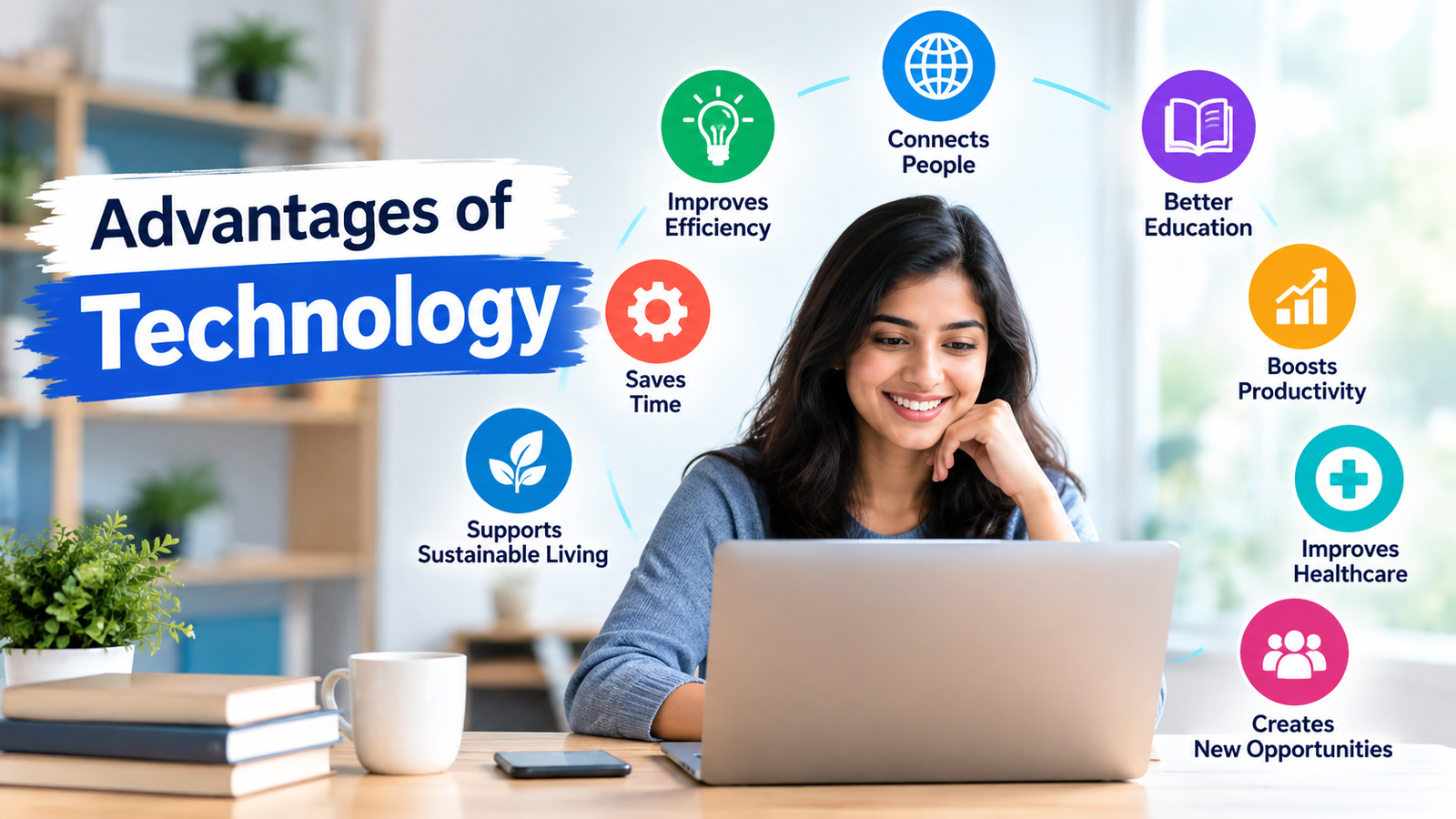
The advantages of technology touch almost everything we do, from the alarm on our phone in the morning to the video call that closes a business deal at night. Technology is the practical use of science to solve problems, save time and create new possibilities. In this guide, we look at the benefits of technology in education, business, communication and industry. We also cover emerging tools like 5G, AI and the Internet of Things, and we weigh them against the drawbacks so you get a balanced picture.
What Is Technology and Why Does It Matter?
Tech advantage starts with a simple idea: tools that make human effort more productive. Technology includes everything from the wheel and the printing press to smartphones, cloud platforms and artificial intelligence. What makes it powerful today is speed. Inventions that once took centuries to spread now reach billions of people within a few years. Because of this, individuals, schools and companies that adopt technology early usually gain a clear edge in efficiency, reach and creativity over those that wait.
10 Advantages of Technology in Everyday Life
The 10 advantages of technology below explain why it has become impossible to separate from modern living.
1. Faster communication. Importance of modern communication is hard to overstate. Email, instant messaging and video calls let families stay close across continents and let teams collaborate in real time. News now travels in seconds, which helps in emergencies, business and personal relationships.
2. Easy access to information. Benefits of the internet begin with knowledge. A student in a small town can read the same research, watch the same lectures and learn the same skills as someone in a major city. This one change has done more to democratize learning than almost any invention before it.
3. Higher productivity. Advantage of modern technology is clearest at work. Automation handles repetitive tasks such as data entry, billing and scheduling, so people can focus on creative and strategic work. Companies finish projects faster and with fewer errors.
4. Better healthcare. Benefits of science and technology are life-saving in medicine. Digital imaging, robotic surgery, wearable monitors and telemedicine help doctors diagnose earlier and treat patients remotely, which is especially valuable in rural areas.
5. Convenience in daily tasks. Pros of modern technology show up in small routines: online banking, digital payments, ride booking, food delivery and smart home devices. Tasks that once meant standing in queues now take a few taps.
6. Global business opportunities. Benefits to technology for entrepreneurs are huge. A small business can sell worldwide through e-commerce, advertise on social platforms and manage customers with affordable software.
7. Entertainment and creativity. Advantages of digital technology include streaming, gaming, digital art and music production. Creators can now publish and earn from their work without needing a large studio or publisher.
8. Improved safety. Modern tools such as GPS, early warning systems, CCTV and weather forecasting help prevent accidents and reduce the damage caused by natural disasters.
9. Job creation in new fields. Benefit of digital technology also includes entirely new careers: data analysts, app developers, cybersecurity experts, cloud engineers and AI specialists did not exist in large numbers a generation ago.
10. Better decision making. Data analytics gives governments and businesses evidence for their choices, replacing guesswork with measurable insights.
Benefits of Technology in Education
Benefits of technology in education are among the most talked-about topics for parents and teachers alike. Digital classrooms, interactive whiteboards, learning apps and online libraries make lessons more engaging than a textbook alone. Students can revisit recorded lectures, practice with instant feedback and learn at their own pace, which supports different learning styles.
Advantages of digital learning also include flexibility and cost savings. Learners can study from home, fit lessons around work or family, and avoid commuting or relocation costs. Advantages e learning platforms add is access: a certificate course from a leading university is now open to anyone with a stable internet connection.
Benefits of artificial intelligence in education are growing fast. AI tutors can adapt practice questions to a student's level, flag where someone is struggling and help teachers with grading and lesson planning. Advantages of artificial intelligence in education are strongest when AI supports teachers rather than replacing them, freeing time for mentoring and discussion.
Drawbacks of technology in education deserve honest attention too. Unequal internet access, screen fatigue, distraction from social media and over-reliance on search tools can weaken focus and critical thinking. Schools get the best results when they blend digital tools with traditional teaching, clear screen-time rules and training for teachers.
Advantages of Information Technology and ICT
Advantages of information technology span every industry. IT systems store and protect huge volumes of data, connect branches across countries and support cloud computing, so businesses can scale without buying expensive hardware. Banks, hospitals, airlines and schools all depend on IT to run smoothly.
Benefits of information and communication technology go a step further by combining computing with telecommunications. Advantage ICT brings to governments includes online public services such as tax filing, certificates and benefit payments, which reduces paperwork and corruption. For citizens, it means less travel and shorter waiting times.
Advantages and disadvantages of ICT should be considered together. On the plus side, ICT improves speed, transparency and reach. On the downside, it raises concerns about data privacy, job displacement through automation and the digital divide between connected and unconnected communities. a well-built website helps businesses use these advantages
Advantages of Computers and Mobile Phones
Advantages of the computer start with speed and accuracy. A computer can process millions of calculations in a second, store enormous amounts of data and run multiple tasks without tiring. Benefits of the computer are visible in offices, laboratories, design studios and homes.
Advantages and disadvantages of using a computer are worth noting for students and professionals. The advantages include productivity, storage, entertainment and connectivity. The disadvantages include eye strain, poor posture, addiction to games and social media, and exposure to viruses and online fraud. Taking regular breaks and using security software handles most of these risks.
Computer networking advantages matter for any organization with more than a few devices. Networks let people share files, printers and internet access, centralize backups and manage security from one place. They also lower costs because resources are shared rather than duplicated.
Advantages of mobile phones essay topics are common in school exams, and the main points are easy to remember. Mobile phones provide instant communication, internet access, cameras, navigation, banking and learning apps in one pocket-sized device. Advantages and disadvantages of mobile phones essay answers should also mention distraction, sleep problems, privacy risks and reduced face-to-face conversation. Smartphone advantages and disadvantages are really about balance: the device is as useful or as harmful as the habits of its user.
5G, Wi-Fi 6 and IoT: Advantages of Next-Generation Connectivity
Advantages of 5G begin with speed and responsiveness. This network generation delivers much faster downloads, very low latency and the ability to connect many devices at once. 5G features and benefits include smooth streaming, real-time gaming, reliable video calls and support for smart cities, connected vehicles and remote surgery.
5G advantages over 4G are easy to summarize. Peak speeds can be many times higher, latency drops to a few milliseconds, and networks handle far more devices per square kilometer. Benefits of 5G over 4G also include better performance in crowded places like stadiums and railway stations.
5G network advantages and disadvantages should be weighed before adopting it widely. The drawbacks include expensive infrastructure, limited coverage in rural areas, higher device costs, greater energy use and security concerns that come with more connected devices. If you want to keep this information handy, many readers save the advantages and disadvantages of 5G as a PDF summary for study or presentations.
Benefits of Wi-Fi 6 are similar in spirit but focus on homes and offices. Wi-Fi 6 advantages include higher speeds, better performance when many devices are connected, improved battery life for devices and stronger security through WPA3. It is a smart upgrade for households with several phones, laptops, TVs and smart gadgets.
Advantages of IoT show up when everyday objects connect to the internet. Internet of Things advantages include remote monitoring, predictive maintenance in factories, smarter energy use at home and real-time tracking in logistics and agriculture. IoT advantages and disadvantages are best understood together: the benefits are efficiency and automation, while the risks are weak device security, data privacy issues and dependence on constant connectivity.
Advanced Technologies: AI, Digital Twins, Quantum Computing and Nanotechnology
Advantages of AI in business include automating customer support, personalizing marketing, detecting fraud and forecasting demand. Benefits of AI for business also include faster decisions and lower operating costs, though companies must manage bias, data quality and employee training carefully.
Advantages of digital twin technology are growing in manufacturing, construction and healthcare. A digital twin is a virtual copy of a physical asset or process, so engineers can test changes, predict failures and optimize performance without risking the real system. Digital twin advantages and disadvantages include lower costs and fewer surprises on one side, and high setup costs and data complexity on the other.
Benefits of quantum computing are still mostly ahead of us, but the potential is big. Quantum computing benefits include solving certain optimization, chemistry and cryptography problems far faster than classical machines. Advantages and disadvantages of quantum computing must include its current limits: fragile hardware, very low operating temperatures, high costs and the future threat to today's encryption methods.
Advantage of nanotechnology lies in working at the scale of atoms and molecules. Nano technology advantages include stronger and lighter materials, targeted drug delivery, more efficient solar cells and better water filtration. Disadvantages of nanotechnology include uncertain long-term health and environmental effects, high production costs and regulatory gaps.
Limitations of edge computing and RPA are also worth knowing if you work in IT. Edge computing brings processing closer to the data source for speed, but it adds hardware management and security complexity. Limitations of RPA include difficulty handling unstructured data, fragile bots when software interfaces change and the need for ongoing maintenance.
Technology in Energy, Engineering and Farming
Modern farming advantages are a strong example of technology serving basic needs. Drones, soil sensors, GPS-guided tractors and weather analytics help farmers use water and fertilizer precisely, raise yields and cut waste. This matters for food security as populations grow.
Advantage of mechanical engineering lies in designing and improving the machines that power transport, manufacturing, energy and healthcare. It offers broad career options, strong demand across industries and the chance to see ideas turn into physical products. Advantages of B Tech are similar for students: a structured technical foundation, placement opportunities and pathways to higher study or entrepreneurship. Benefits of B Tech grow when students add practical projects and internships to their degree.
Advantages of thermal power include steady, large-scale electricity generation that is not affected by weather. Advantages and disadvantages of thermal power plant operations include relatively low setup costs and reliable output against pollution, coal dependency and high water use. Advantages fossil fuels offer are high energy density and existing infrastructure, but emissions and climate impact are major concerns.
Wave energy advantages and disadvantages show why renewables remain a work in progress. Wave energy is predictable and clean, but devices are costly, vulnerable to harsh seas and limited to coastal sites. Limitations of fuel cell technology are similar in nature: they offer clean, efficient power, yet hydrogen storage, cost and infrastructure remain hurdles.
Satellite communication advantages and disadvantages round out the picture. Satellites provide coverage in remote regions, support navigation and broadcasting, and help in disasters. The trade-offs include high launch costs, signal delay and vulnerability to weather and space debris.
Disadvantages of Technology You Should Not Ignore
Advantages and disadvantages of technology must be discussed together to be fair. The main disadvantages include job losses from automation, privacy and cybersecurity threats, health issues from long screen time, reduced physical activity and growing dependence on devices. Environmental impact is another concern, from electronic waste to the energy used by data centers.
Benefits and drawbacks of technology can be balanced with smart habits. Set screen-time limits, use strong passwords and two-factor authentication, keep software updated, verify information before sharing it and keep learning new skills so you stay ready for change. Governments and companies also have a role by building ethical, secure and inclusive systems.
Frequently Asked Questions
1. What are the main advantages of technology?
Speed, convenience, access to information, better healthcare, improved education, new jobs and global connectivity.
2. What is the biggest disadvantage of technology?
Many experts point to over-dependence and privacy risk, along with the effect of automation on jobs.
3. How does technology help education?
It makes learning flexible, interactive and personalized, and it widens access to quality content.
4. Is 5G better than 4G?
Yes, in speed, latency and capacity, though coverage and cost are still catching up.
5. How does technology improve communication?
Email, messaging apps and video calls let people share information instantly across any distance. This helps families stay connected and lets teams work together in real time.
6. What are the advantages and disadvantages of mobile phones?
Mobile phones offer instant communication, internet access, navigation, digital payments and learning apps in one device. The drawbacks include distraction, sleep problems, privacy risks and less face-to-face interaction.
7. What are the benefits of AI in business?
AI automates customer support, personalizes marketing, detects fraud and forecasts demand. This saves time and cuts costs, though companies must manage bias and data quality.
8. What is the Internet of Things (IoT), and what are its advantages?
IoT connects everyday objects like appliances, vehicles and machines to the internet. Its advantages include remote monitoring, predictive maintenance, energy savings and real-time tracking, while weak device security remains a risk.
9. How can technology be used safely?
Use strong passwords and two-factor authentication, keep software updated and verify information before sharing it. Setting screen-time limits also protects your health and focus.
10. Will technology replace human jobs?
Technology will automate many repetitive tasks, but it also creates new roles in areas like data analysis, cybersecurity, cloud computing and AI. Learning new skills is the best way to stay ahead.
Conclusion
The advantages of technology are real, wide-ranging and growing. It saves time, expands opportunity, improves health and learning, and connects people and businesses across the world. At the same time, privacy risks, job disruption, health concerns and environmental costs remind us that technology is a tool, not a cure-all. Used thoughtfully, with the right skills, rules and balance, it can improve life for individuals, companies and entire societies.
“If you want to put these advantages to work for your business, a professional website is a good place to start,”
