Common Problems That Affect Business Website Performance
Understand common website performance issues and discover practical ways to improve speed, usability, security, and functionality.
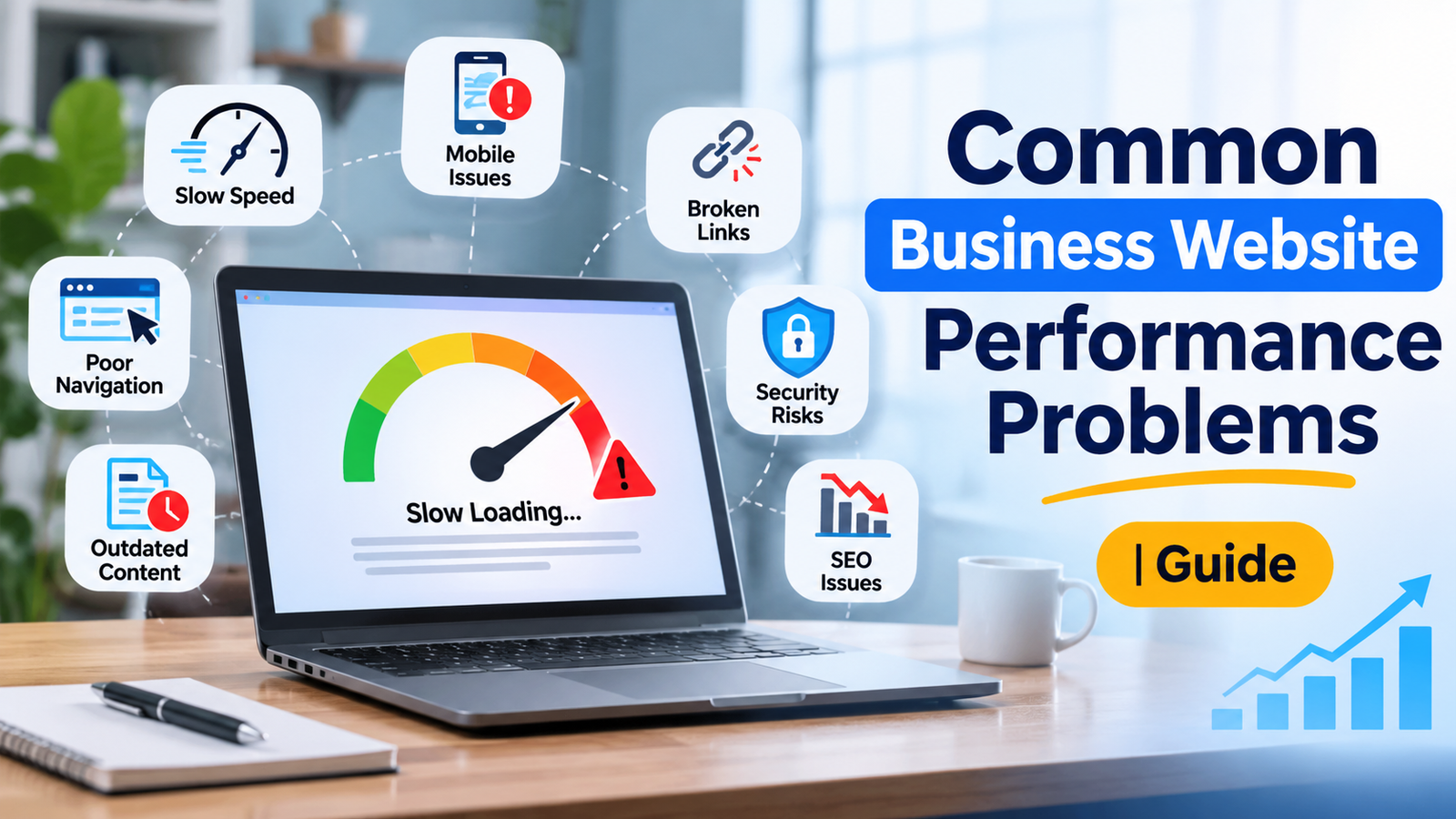
Common Problems That Affect Business Website Performance
A business website plays an important role in building an online presence, attracting visitors, and communicating with potential customers. However, simply having a website does not guarantee a good user experience or consistent results. Several technical and design-related issues can affect how a website performs, how visitors interact with it, and whether they continue browsing.
Understanding the common problems that affect business website performance helps businesses identify weaknesses and take practical steps to improve their websites. Issues such as slow loading speed, poor navigation, outdated content, mobile compatibility problems, and security weaknesses can reduce website effectiveness.
In this guide, we will explore the major website performance problems, why they occur, and how businesses can address them.
Slow Website Loading Speed
One of the most noticeable common problems that affect business website performance is slow loading speed. Visitors generally expect a website to display its content quickly. When pages take too long to load, users may leave before exploring the available information.
Slow website speed can occur because of large image files, unnecessary scripts, excessive plugins, unoptimized code, or poor hosting resources.
How to improve it:
- Compress images without reducing their visual quality.
- Minimize unnecessary JavaScript and CSS files.
- Enable browser caching.
- Choose reliable website hosting.
- Use content delivery networks (CDNs) when appropriate.
- Reduce unnecessary redirects.
Improving loading speed creates a smoother browsing experience and helps visitors access information more efficiently.
Poor Website Navigation
Website navigation helps visitors move between pages and find the information they need. Complicated menus, unclear labels, and confusing page structures can make browsing difficult.
Poor navigation is among the common problems that affect business website performance because visitors may struggle to locate services, product information, contact details, or important business updates.
How to improve it:
- Create a simple and organized navigation menu.
- Use clear page names and descriptive labels.
- Add relevant internal links.
- Include a visible contact section.
- Organize information into logical categories.
A well-structured navigation system makes websites easier to understand and encourages visitors to explore additional pages.
Mobile Responsiveness Issues
Many people access business websites through smartphones and tablets. If a website does not adjust properly to different screen sizes, visitors may experience overlapping text, incorrectly positioned images, difficult navigation, or buttons that are hard to tap.
Mobile compatibility is therefore an important factor when examining common problems that affect business website performance.
How to improve it:
- Use responsive website layouts.
- Test pages on different screen sizes.
- Make buttons easy to tap.
- Use readable font sizes.
- Optimize images for mobile devices.
- Check mobile navigation and forms.
A mobile-friendly website helps provide a consistent experience across devices.
Outdated Website Content
Website content communicates important information about a business, its services, products, and expertise. When information becomes outdated, visitors may find it difficult to understand what the business currently offers.
Old service details, incorrect contact information, expired offers, broken references, and outdated blog articles can affect website credibility.
This is another one of the common problems that affect business website performance, particularly for businesses that rarely review their website content.
How to improve it:
- Review important website pages regularly.
- Update service and product information.
- Correct outdated contact details.
- Refresh relevant blog articles.
- Remove expired announcements.
- Check that internal and external links work correctly.
Keeping website information accurate helps visitors make informed decisions.
Broken Links and Missing Pages
Broken links can prevent visitors from accessing important information. When someone clicks a link and encounters a 404 error or an unavailable page, it can interrupt their browsing experience.
These problems may develop when website pages are deleted, URLs are changed, or internal links are not updated.
How to improve it:
- Regularly check internal and external links.
- Fix broken URLs.
- Set up proper 301 redirects when changing page addresses.
- Create a useful 404 error page.
- Update links whenever website content changes.
Regular link checking helps maintain a smooth browsing experience and improves website structure.
6. Poor Website Design and User Experience
Website design influences how visitors understand and interact with a business. A cluttered layout, inconsistent colors, difficult-to-read text, and excessive pop-ups can make a website uncomfortable to use.
Poor user experience is one of the common problems that affect business website performance because visitors may struggle to understand the website's purpose or find relevant information.
How to improve it:
- Maintain a clean and professional layout.
- Use consistent fonts and colors.
- Keep important information easy to find.
- Avoid unnecessary pop-ups and animations.
- Use clear headings and readable content.
- Place important calls to action strategically.
A user-friendly design helps visitors navigate the website and understand the business more easily.
Lack of Search Engine Optimization
A website may offer useful information and services but still struggle to attract visitors if its pages are not properly optimized for search engines.
Missing title tags, poorly written meta descriptions, duplicate content, incorrect heading structures, and weak internal linking can affect organic search visibility.
SEO-related issues are among the common problems that affect business website performance because search engines need clear information to understand and index website pages.
How to improve it:
- Conduct relevant keyword research.
- Write unique page titles and meta descriptions.
- Use proper heading structures.
- Optimize images with descriptive alt text.
- Create useful and informative content.
- Build relevant internal links.
- Fix technical SEO issues.
A well-planned SEO strategy helps search engines understand website content and makes relevant pages easier to discover.
Website Security Vulnerabilities
Website security is essential for protecting business information and maintaining visitor confidence. Weak passwords, outdated software, insecure plugins, and missing security updates can create opportunities for unauthorized access.
Security problems can also affect website availability and the reliability of online services.
How to improve it:
- Install an SSL certificate.
- Use strong passwords and multi-factor authentication.
- Keep website software and plugins updated.
- Perform regular backups.
- Use trusted security tools.
- Remove unused themes and plugins.
- Monitor suspicious website activity.
Taking preventive security measures helps protect website data and maintain a reliable online presence.
Poor Hosting and Server Performance
Website hosting directly influences how website files are stored and delivered to visitors. Choosing an unsuitable hosting environment can result in slow response times, frequent downtime, and limited resources.
For websites receiving regular traffic, inadequate server capacity may affect performance during busy periods.
How to improve it:
- Select a hosting plan based on website requirements.
- Evaluate server uptime and reliability.
- Choose hosting with sufficient storage and bandwidth.
- Consider scalable hosting solutions.
- Monitor server response times.
- Upgrade hosting resources when necessary.
Reliable hosting provides a stable foundation for maintaining consistent website performance.
Missing or Ineffective Call-to-Action Buttons
A business website should guide visitors toward useful actions, such as submitting an inquiry, requesting a quotation, booking a consultation, or exploring services.
If call-to-action buttons are difficult to find or their messages are unclear, visitors may leave without taking the next step.
How to improve it:
- Use clear action-oriented button text.
- Place CTAs where visitors naturally need them.
- Make buttons visually noticeable.
- Avoid overcrowding pages with too many CTAs.
- Test different button placements and messages.
- Ensure buttons work correctly on mobile devices.
Effective calls to action help visitors understand what to do next and make website interactions more meaningful.
Why Regular Website Maintenance Is Important
Identifying the common problems that affect business website performance is only the first step. Businesses also need to monitor and maintain their websites to prevent recurring issues.
Regular website maintenance helps identify technical errors, improve usability, update content, and maintain security.
Some important maintenance activities include:
- Checking website loading speed.
- Reviewing mobile responsiveness.
- Updating plugins, themes, and software.
- Monitoring website security.
- Checking broken links and missing pages.
- Reviewing website traffic and user behaviour.
- Updating outdated website information.
- Monitoring technical SEO performance.
Consistent maintenance helps businesses keep their websites functional, reliable, and relevant to changing customer expectations.
Conclusion
A business website needs more than an attractive design to deliver a good experience. Technical errors, slow loading speed, poor navigation, outdated content, security vulnerabilities, and SEO issues can all affect its overall effectiveness.
Understanding the common problems that affect business website performance allows businesses to identify weaknesses and make improvements before they negatively affect visitors.
By focusing on website speed, responsive design, user experience, security, content quality, and regular maintenance, businesses can create a more reliable online presence.
A properly planned and maintained website can support customer engagement, improve information accessibility, and contribute to long-term business growth. Investing in professional website planning and development also helps establish a strong foundation for future improvements.