Content Optimization Techniques for Better Rankings: A Complete Guide
Effective SEO Strategies to Improve Website Visibility, Organic Traffic, and Content Performance
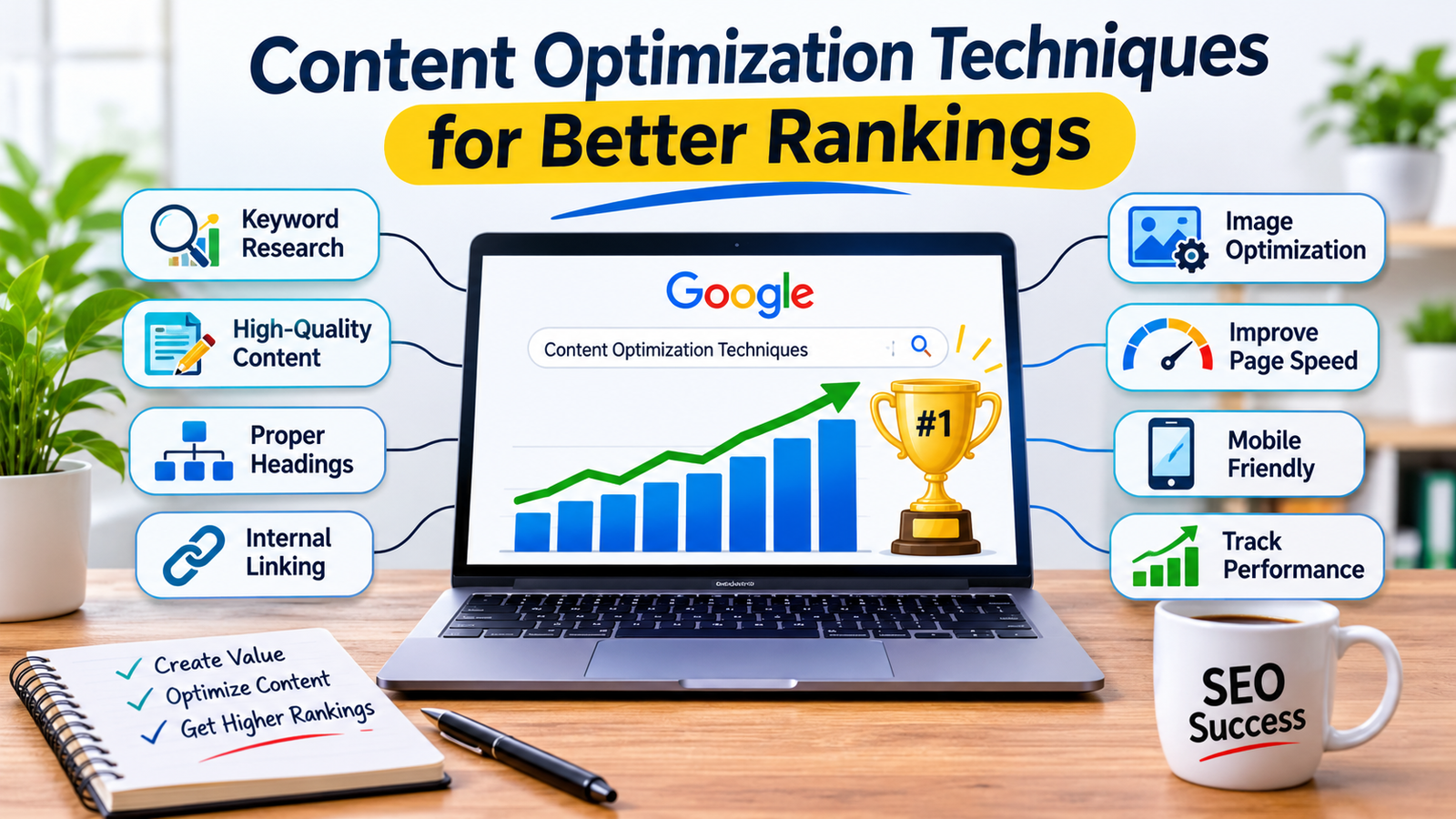
In today's competitive digital environment, having a website is not enough to attract potential customers. Businesses need informative, relevant, and well-structured website content that helps users find the information they are searching for. Search engines evaluate several aspects of a webpage to understand its relevance, usefulness, and overall quality. This makes content optimization an important part of a successful search engine optimization (SEO) strategy.
Content Optimization Techniques for Better Rankings help businesses improve their website content, strengthen search visibility, and create a better experience for visitors. These techniques involve more than simply adding keywords to an article. They include understanding search intent, conducting keyword research, improving content structure, optimizing images, developing internal links, and ensuring that website pages are easy to access across different devices.
A well-planned content optimization strategy can help websites reach relevant audiences, generate organic traffic, and establish credibility within their industry. Whether you operate a small business website, an e-commerce platform, or a professional blog, investing in content quality and optimization can support your long-term digital growth.
Understand Your Audience and Search Intent
The first step toward creating effective website content is understanding your target audience. Before writing an article or updating an existing webpage, identify what your visitors want to learn, what problems they are trying to solve, and what information can help them make informed decisions.
Search intent refers to the purpose behind a user's search query. Understanding this purpose allows you to develop content that directly addresses the user's expectations.
For example, someone searching for website optimization tips may be looking for practical instructions, while someone searching for professional SEO services may want to compare available service providers.
Search intent generally falls into four categories:
- Informational: Users want answers, explanations, or educational resources.
- Navigational: Users want to find a particular website or brand.
- Commercial: Users are researching products or services before making a decision.
- Transactional: Users are ready to purchase a product or complete an action.
When your content matches the purpose of a search query, it becomes more useful to visitors. Therefore, always understand your audience before selecting keywords or developing an article.
Perform Detailed Keyword Research
Keyword research is one of the foundations of content optimization. It helps identify the search terms people use when looking for information, products, or services related to your business.
Choosing the right keywords helps you create content around topics that are relevant to your audience. However, selecting keywords should not depend only on search volume. Relevance, competition, and search intent are equally important.
Start by identifying one primary keyword that represents the main subject of your webpage. Then research related secondary keywords, long-tail keywords, and supporting phrases that can help you cover the topic naturally.
For example, an article focused on content optimization may include related topics such as:
- On-page SEO strategies
- Website content improvement
- SEO-friendly content writing
- Keyword placement techniques
- Organic search visibility
- Website performance optimization
Include the primary keyword naturally in important locations such as the page title, main heading, introduction, and relevant sections. Supporting keywords should appear where they genuinely fit the discussion.
Avoid keyword stuffing or repeating the same phrase unnecessarily. Search engines are designed to understand related concepts, so meaningful and comprehensive content is more valuable than excessive keyword repetition.
Create Original, Informative, and Valuable Content
Content quality is essential for building a successful website. Visitors come to your website because they expect useful information, clear explanations, or solutions to specific problems. If your content does not satisfy these expectations, users may leave without exploring other pages.
High-quality content should provide meaningful information rather than simply filling a webpage with words.
When developing an article, focus on explaining the topic clearly, answering common questions, and providing practical suggestions. Include relevant examples wherever they help readers understand complicated ideas.
Optimize Page Titles and Meta Descriptions
Page titles and meta descriptions help communicate the subject of your webpage to search engines and potential visitors. They are important elements of on-page SEO and can influence how users interact with your website in search results.
A page title should clearly explain what the page contains. Include your primary keyword naturally while keeping the title relevant and descriptive.
For example:
Content Optimization Techniques for Better Rankings: A Complete Guide
Avoid creating titles that are misleading, excessively repetitive, or unrelated to the actual content.
Organize Content Using Proper Heading Structure
Content structure plays an important role in readability and navigation. A well-organized webpage allows visitors to understand the subject quickly and find specific information without reading every paragraph.
Heading tags help divide an article into meaningful sections. They also provide search engines with additional context about the organization of your content.
Use a logical heading hierarchy:
- H1 for the primary page title.
- H2 for major sections.
- H3 for supporting topics within those sections.
- H4 for additional subsections when required.
For example, an article about SEO content improvement may have separate sections covering keyword research, content quality, internal linking, image optimization, and mobile usability.
Each heading should accurately describe the information below it. Avoid adding keywords to headings simply for repetition. Instead, write meaningful headings that improve the reader's understanding.
A clear heading structure makes long articles easier to navigate and helps create a more professional website experience.
Strengthen Internal Linking and Website Navigation
Internal linking is the practice of connecting different pages within the same website. It helps visitors discover related information and allows search engines to understand how your website content is connected.
For example, a blog discussing website content optimization can link to other relevant articles about digital marketing, website development, keyword research, and technical SEO.
A strong internal linking strategy can help distribute link equity across relevant pages, improve content discovery, and encourage visitors to explore additional resources.
Use descriptive anchor text that explains the subject of the linked page. For example, instead of using a generic phrase such as "read more," use relevant text such as "website development strategies."
However, internal links should always be meaningful. Avoid inserting unrelated links or using excessive anchor text variations that make paragraphs difficult to read.
Review your website structure regularly to identify important pages that need better internal connections.
Improve Website Speed and User Experience
Website performance is an important part of an effective SEO strategy. Visitors expect webpages to load quickly and function smoothly. A slow website can create frustration and discourage users from exploring additional pages.
Businesses should regularly evaluate website performance and identify technical issues that may affect visitors.
Some effective improvements include:
- Compressing large images.
- Removing unnecessary scripts and plugins.
- Enabling browser caching.
- Using reliable web hosting.
- Minimizing unused CSS and JavaScript.
- Implementing a content delivery network where appropriate.
You should also monitor Google's Core Web Vitals, which measure important aspects of user experience.
The three main Core Web Vitals are:
Largest Contentful Paint (LCP): Measures how quickly the main content of a webpage becomes visible.
Interaction to Next Paint (INP): Measures how quickly a webpage responds to user interactions.
Cumulative Layout Shift (CLS): Measures unexpected layout movement while a page loads.
Improving these measurements can help create a smoother browsing experience. Website performance should be monitored regularly rather than checked only once during development.
Make Content Mobile-Friendly
Mobile accessibility is essential because many visitors browse websites using smartphones and tablets. A webpage that is difficult to read or navigate on smaller screens can negatively affect the user experience.
Responsive website design allows content and page elements to adjust according to different screen sizes.
To improve mobile usability, make sure that text remains readable, images fit properly, navigation menus work smoothly, and buttons are easy to interact with.
Avoid layouts that require horizontal scrolling or force visitors to zoom in to read important information.
It is also important to check that the mobile version contains the same essential content as the desktop version. Google primarily uses the mobile version of website content for indexing, so maintaining consistency is important.
A mobile-friendly website makes information more accessible and helps businesses reach visitors across different devices.
Update and Improve Existing Website Content
Publishing new articles is useful, but maintaining existing content is equally important. Over time, information may become outdated, industry practices may change, and new questions may emerge.
Regular content reviews help ensure that your website continues to provide accurate and useful information.
During an update, check whether the article needs new information, improved explanations, relevant examples, updated statistics, or better internal links.
You should also review titles, meta descriptions, images, and broken links.
Use Google Search Console to identify pages receiving search impressions but relatively few clicks, pages losing visibility, and queries that may reveal opportunities to improve content.
Do not update articles merely to change their publication dates. Make meaningful improvements that increase the usefulness and accuracy of the information.
Develop a Consistent Content Optimization Strategy
Long-term search visibility requires a planned and consistent approach. Instead of optimizing individual pages without direction, businesses should develop a content strategy that supports their main products, services, and industry topics.
Begin by identifying important subjects that are relevant to your audience. Conduct keyword research and organize related topics into content groups.
Create informative articles around these subjects and connect them through relevant internal links. This helps visitors navigate your website and understand the relationship between different resources.
Establish a regular content review schedule and use performance data to identify improvement opportunities.
A successful strategy should combine quality content creation, on-page SEO, technical performance, user experience, and continuous monitoring.
Consistency and meaningful improvements are more valuable than publishing large quantities of low-quality articles.
Conclusion
Content optimization is an essential part of building a strong online presence and improving website visibility. Creating informative articles is only the beginning. Businesses must also focus on search intent, keyword research, content structure, internal linking, image optimization, website performance, and mobile accessibility.
Applying effective Content Optimization Techniques for Better Rankings can help make website pages more relevant, useful, and accessible to both visitors and search engines.
However, SEO results do not happen overnight. They require regular monitoring, meaningful content improvements, and a consistent approach to website development.
Businesses that prioritize valuable information and user experience can build a stronger digital presence, attract relevant organic visitors, and create a solid foundation for sustainable online growth.
Frequently Asked Questions (FAQs)
1. What are content optimization techniques?
Content optimization techniques are methods used to improve website content for search engines and visitors. They include keyword research, content structuring, internal linking, image optimization, and improving readability.
2. Why is content optimization important for SEO?
It helps search engines understand webpage topics and makes information more useful to visitors. Proper optimization can support organic visibility, user engagement, and website performance.
3. How do I choose the right keywords for my content?
Research relevant search terms based on your audience, business subject, search intent, and competition. Select a primary keyword and supporting terms that naturally relate to the topic.
4. How often should website content be updated?
Review content periodically and update it when information becomes outdated, links stop working, or there are meaningful opportunities
