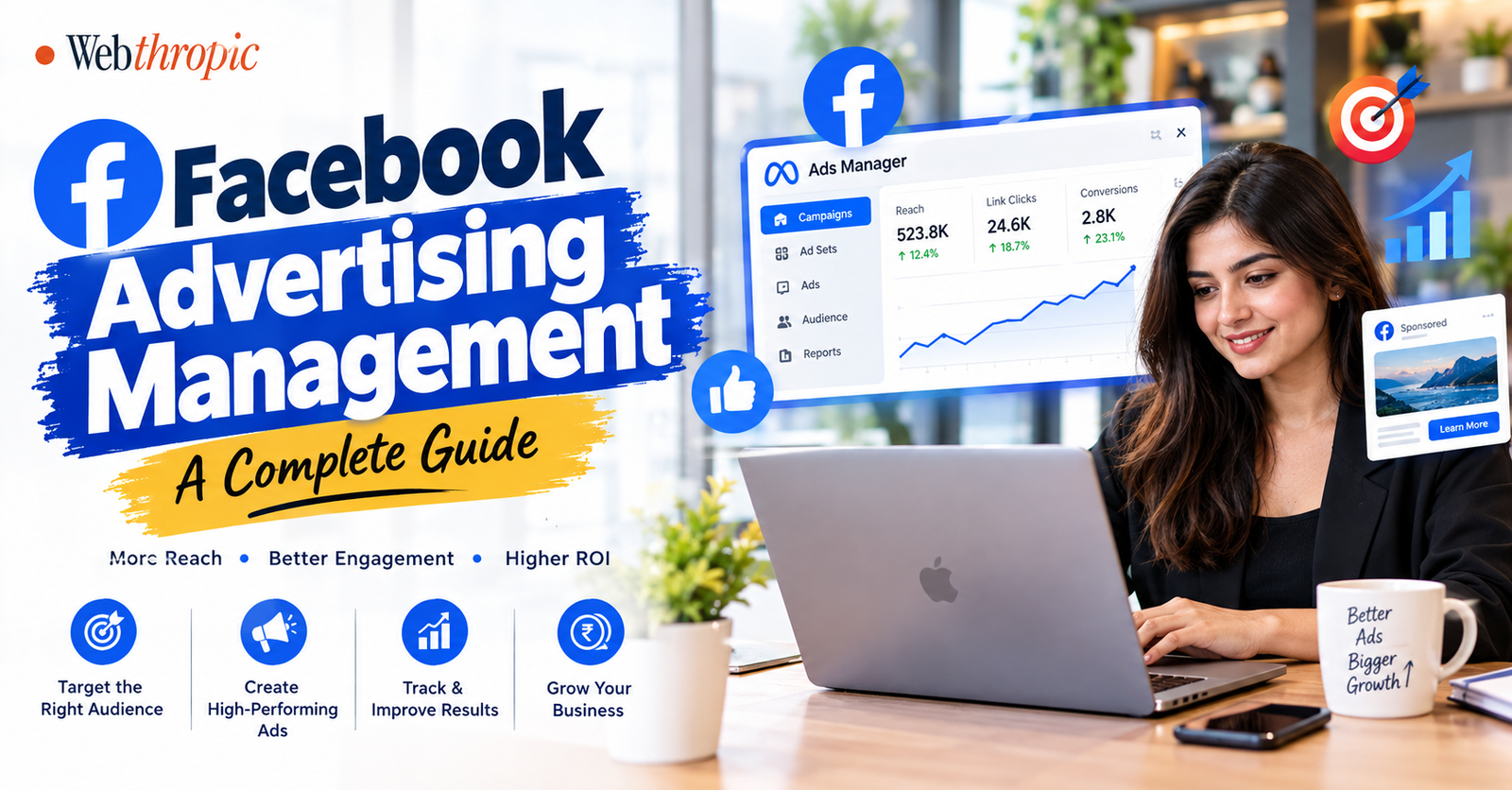
Facebook Advertising Management: A Complete Guide
Learn How to Create, Manage, and Optimise Facebook Ad Campaigns
Social media advertising has become an important part of digital marketing for businesses of all sizes. Whether you operate a small local business, an online store, or a growing company, advertising on Facebook can help you reach potential customers, promote your services, and increase sales. However, getting good results requires more than simply creating an advertisement and setting a budget.
Effective facebook advertising management involves planning campaigns, understanding your target audience, creating engaging advertisements, monitoring performance, and improving results over time. When these activities are managed correctly, businesses can make better use of their advertising budgets and reach people who are more likely to become customers.
This guide explains how Facebook advertising works, how to use its management tools, and which strategies can help you build more effective advertising campaigns.
What Is Facebook Advertising Management?
Facebook advertising management is the process of planning, creating, running, monitoring, and optimising paid advertising campaigns on Facebook. It includes selecting campaign objectives, identifying the right audience, choosing advertising formats, managing budgets, and analysing campaign performance.
Businesses can use Facebook advertisements to achieve several goals, including:
- Increasing brand awareness among potential customers.
- Generating enquiries and qualified leads.
- Promoting products, services, and special offers.
- Driving visitors to a website or landing page.
- Increasing online purchases and conversions.
- Encouraging people to contact a business.
A well-planned advertising strategy begins with a clear objective. For example, a service-based company may focus on generating enquiries, while an ecommerce business may prioritise product sales. Selecting the appropriate objective helps align campaign settings with business requirements.
Understanding Facebook Ads Manager
Facebook Ads Manager is Meta's advertising tool for creating and managing paid campaigns. It allows advertisers to control important campaign settings from one place.
Using this tool, businesses can create campaigns, select audiences, set advertising budgets, choose placements, review performance metrics, and make changes when necessary.
The platform organises advertising into three main levels:
1. Campaign Level
The campaign level defines the primary objective of your advertising activity. Depending on your business goals and the options available in the account, you may select objectives related to awareness, traffic, engagement, leads, app promotion, or sales.
For example, a business introducing a new service might choose an awareness-focused campaign, while a company seeking customer enquiries could consider a lead-generation objective.
2. Ad Set Level
The ad set level controls settings such as audience selection, budget scheduling, placements, and optimisation options. Advertisers can define the people they want to reach based on available targeting features.
Careful audience selection helps ensure that advertisements are relevant to potential customers rather than being shown without a clear strategy.
3. Ad Level
The ad level contains the actual advertisement that people see. It includes the image or video, headline, primary text, destination, and call-to-action button.
A clear message, attractive creative, and relevant offer can encourage people to learn more about your business.
Understanding these three levels makes campaign management easier and helps advertisers identify where improvements may be needed.
What Is Meta Ads Manager?
Meta Ads Manager is the advertising management platform used to create, manage, and measure campaigns across supported Meta placements, including Facebook and Instagram.
It provides businesses with a central place to manage advertising activities and review campaign performance. Advertisers can compare different creatives, examine audience responses, and assess whether their campaigns are meeting their objectives.
For example, an online clothing store can test two different product advertisements and compare their results. One advertisement may generate more website visits, while the other may produce more purchases. Analysing these differences helps the business make more informed decisions.
Meta advertising tools also provide reporting features that help businesses understand how their budgets are being used. However, results depend on factors such as audience relevance, competition, creative quality, landing-page experience, and campaign settings.
How to Use FB Ads Manager Effectively
FB Ads Manager can help businesses organise their advertising activities, but successful campaigns require proper planning and regular analysis.
Follow these practical steps to get started.
Step 1: Define Your Advertising Goals
Before launching a campaign, decide what you want to achieve. Your goal could be generating leads, increasing website traffic, promoting a product, or improving brand recognition.
Choose a measurable outcome that supports your broader business objectives.
Step 2: Identify Your Target Audience
Understand your potential customers before creating advertisements. Consider their interests, needs, location, age range where appropriate, and relationship with your business.
For example, a local service provider may focus on customers within its service area. An online store shipping nationally may use a broader audience strategy.
Use available targeting options responsibly and ensure your campaigns comply with Meta's advertising policies.
Step 3: Create Engaging Advertisements
Your advertisement should communicate its value quickly. Use clear images or videos, a compelling headline, concise copy, and a relevant call to action.
Avoid making exaggerated claims or presenting confusing information. Explain how your product or service can help customers and provide a clear next step.
Step 4: Set a Realistic Budget
Determine how much you can comfortably spend on testing and running your campaign. Begin with a manageable budget and evaluate the results before making significant increases.
Remember that a higher budget does not automatically guarantee better performance. Audience quality, competition, campaign objectives, and the quality of your offer all influence outcomes.
Step 5: Monitor Campaign Performance
Review campaign results regularly. Look at the metrics that correspond to your objectives, such as cost per lead, conversion rate, cost per purchase, or return on advertising spend.
Use these insights to identify which advertisements perform well and which need improvement.
Choosing the Right Ad Manager for Facebook Strategy
Selecting an appropriate ad manager for Facebook strategy depends on your business type, marketing goals, audience, and available resources.
For small businesses, a straightforward campaign with a clearly defined audience and one strong offer can be a sensible starting point. Larger businesses may need multiple campaigns for different products, customer groups, or stages of the buying journey.
Consider the following practices:
Use a clear offer: Give customers a specific reason to respond, such as requesting a consultation, exploring a product, or downloading a useful resource.
Match the message to the audience: A person discovering your business for the first time may need different information from someone who has already visited your website.
Test different creatives: Compare variations in headlines, images, videos, and calls to action. Change elements systematically so you can understand what influences performance.
Improve the destination page: Ensure that your website or landing page loads properly, works on mobile devices, and makes the next step easy to understand.
Review results consistently: Use campaign data to make informed adjustments instead of relying only on impressions or likes.
Common Facebook Advertising Mistakes to Avoid
Even well-funded advertising campaigns can underperform when basic mistakes are overlooked.
Targeting an Audience That Is Too Broad or Too Narrow
An audience that is too broad may include people who are unlikely to need your product. An overly narrow audience can limit delivery and reduce opportunities to reach potential customers.
Choose audience settings based on your offer and test them using campaign results.
Using Weak Advertising Creatives
Low-quality visuals, unclear headlines, and generic messages can make advertisements less appealing. Create content that immediately communicates what you offer and why it matters.
Ignoring the Landing Page
An advertisement may generate clicks but few enquiries if the destination page is confusing, slow, or difficult to navigate. Keep the page relevant to the advertisement and make contact or purchasing options easy to find.
Changing Campaigns Too Frequently
Frequent adjustments can make it difficult to understand what is working, especially when campaigns have limited data. Allow sufficient time and delivery to evaluate performance, while addressing clear technical issues or policy problems promptly.
Measuring Only Likes and Impressions
Engagement can provide useful information, but it does not always translate into business results. Track meaningful outcomes such as qualified leads, purchases, conversion rates, and acquisition costs.
Important Metrics to Track
To understand whether your campaigns are effective, focus on metrics that align with your goals.
- Reach: The number of unique people who saw your advertisement.
- Impressions: The number of times your advertisement was displayed.
- Click-through rate (CTR): The percentage of impressions that resulted in clicks, according to the metric's definition.
- Cost per click (CPC): The average cost for each click measured by the platform.
- Cost per lead: The advertising cost associated with each recorded lead.
- Conversion rate: The percentage of relevant visitors or interactions that resulted in a desired action.
- Return on ad spend (ROAS): The revenue attributed to advertising divided by advertising expenditure, where reliable revenue tracking is available.
For example, if a campaign spends ₹5,000 and generates 25 leads, the average advertising cost per lead is ₹200. This calculation helps you assess the campaign, although you should also consider lead quality and whether those leads become paying customers.
Accurate tracking is essential. Where appropriate, use Meta Pixel, Conversions API, and properly configured conversion events to improve measurement, subject to applicable privacy requirements and consent obligations.
Benefits of Professional Facebook Advertising Management
Managing advertising campaigns takes time, testing, and analytical skills. Businesses with limited experience may find it difficult to balance campaign setup, creative development, audience research, and performance monitoring.
Professional facebook advertising management can help businesses establish a structured campaign strategy, organise testing, monitor relevant metrics, and identify opportunities for improvement.
Potential benefits include better budget control, more consistent campaign monitoring, clearer reporting, and a more organised approach to lead generation.
However, professional management cannot guarantee a specific number of leads, sales, or a particular return on investment. Results depend on the business offer, market competition, pricing, customer demand, and many other factors.
Businesses should select a management approach based on their goals, budget, and internal capabilities.
Conclusion
Successful Facebook advertising requires a combination of clear planning, relevant targeting, engaging creative content, and consistent performance analysis. Tools such as Facebook Ads Manager and Meta Ads Manager give businesses the ability to organise campaigns, monitor important metrics, and make data-informed decisions.
Whether you are learning to use FB Ads Manager independently or choosing an ad manager for Facebook campaigns, focus on measurable goals and continuous improvement.
Start with a clear objective, test your advertisements carefully, track meaningful conversions, and invest more confidently when the data supports your decisions. With a structured approach, Facebook advertising can become a valuable part of your digital marketing strategy.