How Digital Innovation Is Transforming the Modern Retail Business
Explore how modern technology helps retailers improve customer experiences, streamline operations, and achieve sustainable business growth.
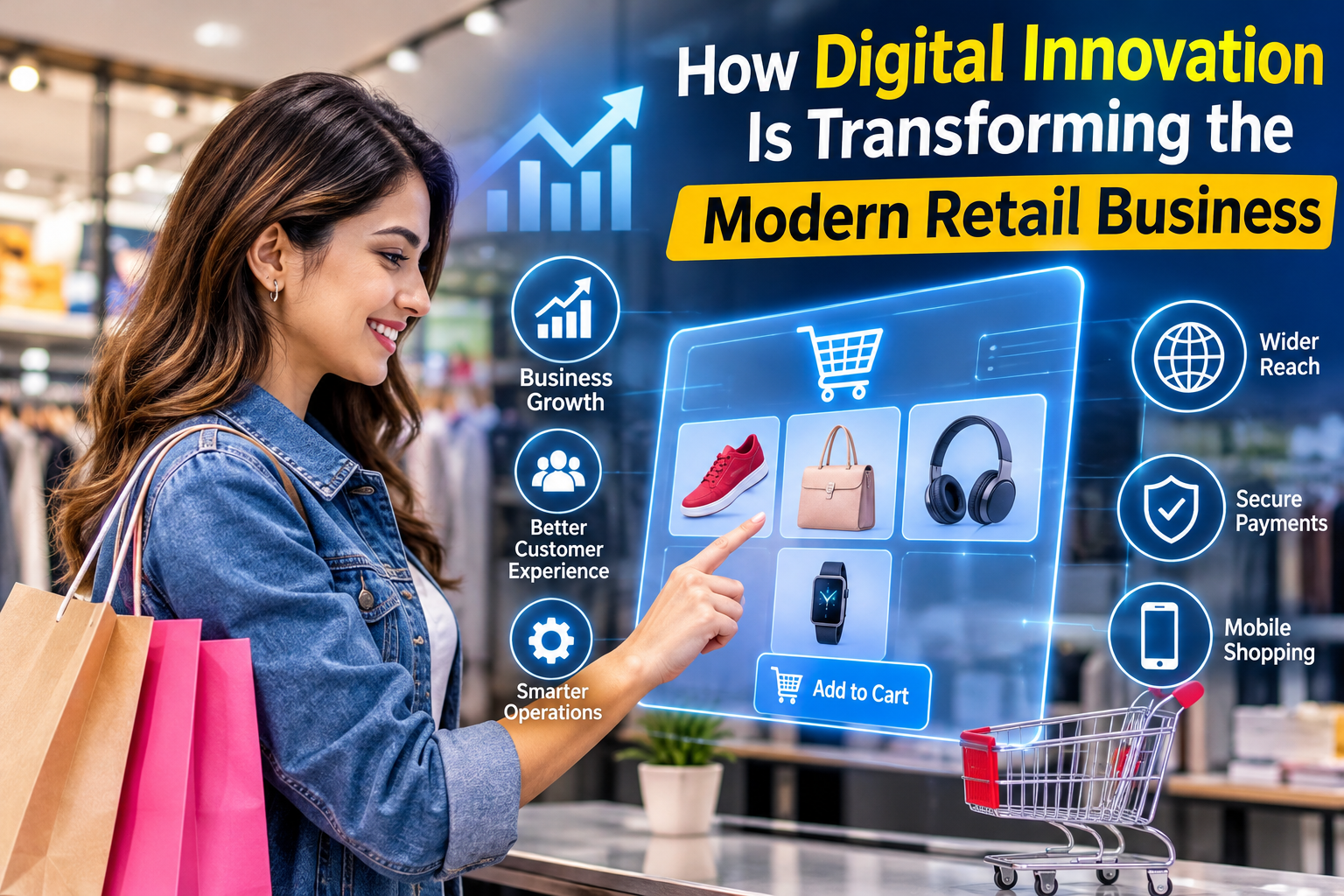
The retail industry has experienced significant changes over the past few years. Technology has transformed how businesses promote products, communicate with customers, manage inventory, and handle daily operations. Consumers now expect convenient shopping experiences, quick customer support, secure transactions, and accurate product information. As a result, retailers need to adapt to changing market expectations and explore new ways to improve their business performance.
Digital transformation is no longer limited to large retail companies. Small businesses, independent sellers, startups, and established retailers can also benefit from modern technology. From creating a professional online presence to automating business activities, digital tools offer practical opportunities to improve efficiency and reach more customers.
Businesses that understand these changes can develop stronger customer relationships, improve operational processes, and create sustainable growth strategies.
Understanding Digital Transformation in the Retail Industry
Digital transformation refers to the use of modern technologies to improve business processes, customer interactions, and overall performance. In the retail sector, it includes adopting digital platforms, automated systems, customer management tools, online payment solutions, and data analytics.
Traditional retail operations often depend on manual activities such as maintaining sales records, tracking stock, managing customer information, and preparing reports. These processes can consume considerable time and increase the possibility of human error.
Digital tools help simplify these activities by organizing information and automating repetitive tasks. Retailers can manage different business functions more efficiently while focusing on customer satisfaction and business development.
Digital transformation is not simply about adopting new software. It involves identifying business challenges and selecting suitable technologies that support long-term objectives.
Developing a Strong Digital Presence
A professional digital presence is one of the most important requirements for modern retail businesses. Before purchasing a product, many customers search online to explore available options, compare prices, and understand product features.
Businesses without a reliable online presence may miss opportunities to connect with these potential customers.
A well-designed digital platform allows retailers to:
- Display products and services professionally.
- Share business information and contact details.
- Provide accurate product descriptions.
- Communicate important updates and announcements.
- Build credibility among potential customers.
- Generate inquiries and business opportunities.
A professional website should be easy to navigate, visually appealing, and compatible with different devices. Customers should be able to find relevant information without unnecessary complications.
Retailers should also maintain consistent business information across their digital channels. This helps create a recognizable brand identity and improves customer confidence.
Improving Customer Experience Through Technology
Customer experience has become a major factor in retail success. Customers generally prefer businesses that offer convenience, clear communication, reliable service, and simple purchasing processes.
Technology can improve the entire customer journey, from discovering a product to receiving after-sales support.
For example, retailers can introduce live chat facilities, automated responses, digital product catalogs, personalized recommendations, and convenient payment methods.
Mobile-friendly platforms are particularly important because many customers use smartphones to search for products and services. A platform that works smoothly on mobile devices can make browsing and purchasing more convenient.
Businesses should also focus on understanding customer feedback. Reviews, surveys, and support requests can provide useful information about customer expectations.
By identifying common problems and addressing them promptly, retailers can improve satisfaction and encourage repeat purchases.
Making Inventory Management More Efficient
Inventory management is an important part of retail operations. Businesses need to maintain the right quantity of products to meet customer demand without creating unnecessary storage costs.
Manual stock management can become difficult as the number of products and orders increases. It may also lead to inaccurate records, delayed updates, and difficulties identifying low-stock items.
Digital inventory management systems can help retailers monitor stock levels, record incoming and outgoing products, and maintain organized inventory information.
Some useful features include:
- Real-time stock monitoring.
- Automatic low-stock notifications.
- Product categorization.
- Purchase and sales records.
- Inventory movement tracking.
- Detailed inventory reports.
These features help business owners understand which products are performing well and which items require attention.
Better inventory visibility can also support purchasing decisions, reduce unnecessary expenses, and improve order management.
Strengthening Retail Marketing Through Digital Channels
Marketing is essential for attracting customers and increasing brand awareness. Traditional marketing methods remain useful, but digital channels offer additional opportunities to reach relevant audiences.
Retailers can use several online marketing strategies to promote their products and services.
Search Engine Optimization
Search engine optimization, commonly known as SEO, helps businesses improve their visibility in search engine results.
Retailers can publish useful articles, optimize product information, improve website performance, and target relevant search terms.
Consistent SEO efforts can help attract visitors who are actively searching for products or information related to the business.
Social Media Marketing
Social media platforms allow retailers to communicate directly with customers and promote their products through engaging content.
Businesses can share product images, videos, customer testimonials, special offers, and educational posts.
Regular interaction with followers also helps businesses understand customer interests and build stronger relationships.
Email Marketing
Email marketing is useful for sharing product updates, promotional offers, newsletters, and important announcements.
Retailers can organize their customer lists and send relevant messages based on customer interests and previous interactions.
The focus should remain on providing useful information rather than sending excessive promotional messages.
Content Marketing
Content marketing involves publishing informative and valuable material that addresses customer questions and interests.
Product guides, buying tips, comparison articles, tutorials, and industry updates can help businesses attract relevant audiences while establishing credibility.
Combining these strategies can create a more consistent and effective digital marketing approach.
Offering Secure and Convenient Payment Options
Payment convenience plays an important role in customer satisfaction. Customers expect payment processes to be simple, reliable, and secure.
Retailers can improve payment experiences by offering suitable digital payment methods, including cards, UPI, net banking, and supported payment gateways.
Businesses should choose payment providers that offer appropriate security features and reliable transaction processing.
Important considerations include:
- Secure payment processing.
- Clear transaction details.
- Transparent refund policies.
- Reliable payment confirmation.
- Multiple suitable payment options.
- Proper handling of customer information.
Retailers should also ensure that customers understand the payment process before completing a transaction.
A smooth payment experience can reduce unnecessary difficulties and contribute to customer confidence.
Automating Repetitive Business Activities
As retail operations expand, managing every activity manually can become time-consuming.
Business automation helps reduce repetitive work by using software and digital systems to perform routine tasks.
Examples include automated order notifications, invoice generation, stock alerts, customer follow-up messages, and sales report preparation.
Automation can provide several advantages:
- Time Savings: Employees can spend less time on repetitive administrative activities.
- Improved Accuracy: Automated systems can reduce certain manual data-entry errors.
- Better Organization: Business information can be maintained in structured formats.
- Faster Communication: Customers can receive timely order updates and notifications.
- Operational Efficiency: Teams can focus on important business activities.
However, automation should be introduced carefully. Businesses need to select tools that match their operational requirements and ensure that employees understand how to use them.
Why Mobile Accessibility Matters for Retailers
Mobile devices have become an important part of everyday shopping and product research. Customers frequently use smartphones to discover products, check prices, read reviews, and contact businesses.
Retailers should ensure that their digital platforms provide a consistent experience across smartphones, tablets, and desktop computers.
A mobile-friendly platform should include:
- Responsive page layouts.
- Readable text and clear images.
- Simple navigation.
- Fast-loading pages.
- Easy-to-use contact options.
- Convenient payment processes.
Mobile accessibility is also important for search visibility and customer engagement.
Businesses should regularly test their platforms on different screen sizes to identify usability problems and make necessary improvements.
Building Customer Loyalty With Personalized Services
Attracting new customers is important, but retaining existing customers is equally valuable.
Digital customer relationship management systems can help retailers organize customer information, track interactions, and understand individual preferences.
With appropriate customer data and consent, businesses can provide more relevant product recommendations, personalized offers, and useful updates.
Loyalty programs are another way to encourage repeat purchases. Retailers can introduce reward points, membership benefits, exclusive discounts, or special offers for returning customers.
Personalization should always respect customer privacy. Businesses must handle personal information responsibly and follow applicable data protection requirements.
A customer-focused approach can help retailers establish lasting relationships and develop a stronger reputation.
Choosing the Right Digital Tools for Business Growth
Not every business requires the same technology. A small retail store may need basic billing and inventory software, while a larger company may require integrated systems for multiple locations, employees, and sales channels.
Before investing in digital tools, business owners should evaluate their requirements.
Important factors to consider include:
Business Requirements: Identify the activities that need improvement, such as stock tracking, billing, marketing, or customer support.
Budget: Select solutions that offer useful features within the available financial resources.
Ease of Use: Choose tools that employees can understand and operate without unnecessary complexity.
Scalability: Consider whether the solution can support future business expansion.
Security: Evaluate data protection, access controls, backup facilities, and transaction security.
Customer Support: Reliable technical assistance can help businesses resolve issues and maintain smooth operations.
A carefully selected technology system can provide long-term value without creating unnecessary expenses.
Businesses exploring Digital Solutions for Growing Retail Businesses can learn how modern digital approaches support operational efficiency, customer engagement, and business development.
Common Digital Challenges Faced by Retail Businesses
Although digital transformation offers several advantages, businesses may face challenges while adopting new technologies.
Some common difficulties include:
Limited Technical Knowledge
Business owners and employees may not have sufficient experience with digital tools. Training and simple implementation processes can help address this problem.
Budget Constraints
Small businesses may have limited budgets for software, marketing, and technical development. Starting with essential tools and expanding gradually can be a practical approach.
Data Security Concerns
Digital systems involve business and customer information. Retailers should use secure platforms, strong passwords, access controls, and regular backups.
Resistance to Change
Employees may find it difficult to adapt to new systems. Explaining the benefits and providing practical training can make the transition easier.
Conclusion
Digital innovation has become an important part of modern retail management. Businesses can use technology to improve their online presence, simplify inventory management, strengthen customer relationships, streamline operations, and develop more effective marketing strategies.
Whether a retailer operates a small local store or manages a growing business, selecting the right digital tools can create valuable opportunities for improvement.
The key is to understand customer expectations, identify operational challenges, and adopt practical solutions that support long-term objectives. Retailers that remain adaptable and focus on continuous improvement will be better positioned to respond to changing market conditions.
Digital transformation is not a one-time activity. It is an ongoing process that helps businesses become more organized, customer-focused, and prepared for future growth.

