Keyword Research: A Complete Guide to Finding the Right Keywords for SEO
Understand how to find, analyze and select the right keywords to improve SEO performance and website visibility.
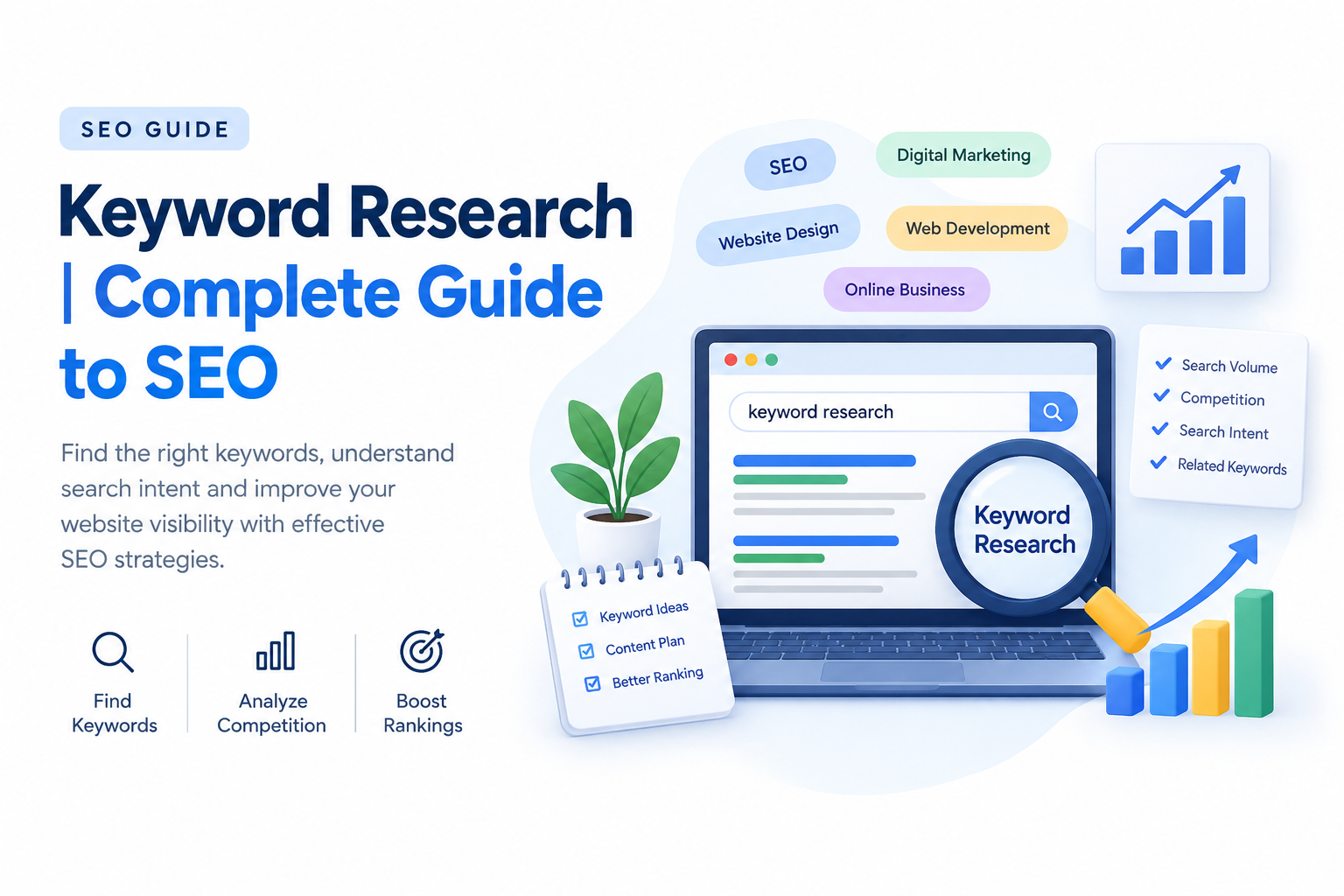
Creating content for a website is important, but publishing articles regularly does not guarantee that people will find them on search engines. To attract the right audience, businesses need to understand what their potential customers are searching for and what information they expect to find. This is where keyword research plays an important role in search engine optimization (SEO).
Keyword research is the foundation of a successful SEO strategy because it helps identify the search terms people use when looking for information, products or services. It allows businesses to understand customer interests, discover content opportunities and create website pages that match relevant search queries.
For example, a business owner planning to establish an online presence might search for website development, digital marketing services, SEO solutions or eCommerce website design. These search terms help businesses understand what potential customers need and how to create relevant content.
Whether you manage a business website, an online store, a service-based company or a blog, understanding keyword research can help improve your content strategy and build long-term organic visibility.
What Is Keyword Research?
Keyword research is the process of discovering, analyzing and selecting search terms that people enter into search engines such as Google and Bing. These terms help website owners understand what users are interested in and what information they want to find.
The process involves identifying relevant keywords, checking their search volume, understanding search intent, analyzing competition and selecting terms that match your website's purpose.
For example, a company offering digital marketing services may identify keywords such as:
- Digital Marketing
- SEO Services
- Social Media Marketing
- Google Ads
- Content Marketing
- Website Optimization
These keywords can be used to plan service pages, informative articles, landing pages and other website content.
However, selecting keywords should not be based only on popularity. A useful keyword must also be relevant to your business and provide value to the people visiting your website.
Why Is Keyword Research Important for SEO?
Keyword research helps businesses understand what their target audience searches for and create relevant website content. Its key benefits include:
1. Improves Website Visibility
Using relevant keywords naturally in titles, headings and content helps search engines understand your website pages.
2. Attracts Relevant Organic Traffic
It helps target search terms that attract visitors genuinely interested in your products or services.
3. Understands Customer Behaviour
Search queries reveal customer interests, questions and requirements, helping businesses create useful content.
4. Supports Content Planning
Keyword research helps discover new blog topics, organize website content and avoid unnecessary duplication.
5. Identifies Business Opportunities
It reveals potential topics and service-related searches that can help businesses attract enquiries and generate leads.
Different Types of Keywords Used in SEO
Keywords can be divided into different categories based on their length and purpose.
1. Short-Tail Keywords
Broad search terms, usually containing one or two words.
Examples:
- SEO
- Website Design
- Digital Marketing
- Web Development
2. Medium-Tail Keywords
More specific search terms, generally containing two or three words.
Examples:
- Technical SEO Services
- Website Development Company
- Social Media Marketing
- Website Maintenance
3. Long-Tail Keywords
Detailed search phrases that target specific user requirements.
Examples:
- How to improve website ranking
- SEO strategies for small businesses
- Website development cost in India
4. Branded Keywords
Search terms containing a specific company, product or brand name.
Example: A company name or its specific service name.
5. Local Keywords
Search terms that include a geographical location.
Examples:
- SEO Company in India
- Website Designer in Patna
- Digital Marketing Agency in Delhi
Local keywords help businesses reach customers searching for services in specific locations.
Common Keyword Research Mistakes to Avoid
Even a well-planned SEO strategy can become less effective when keyword research is not performed properly. Avoid these common mistakes.
Choosing Only High-Volume Keywords
High search volume does not automatically mean a keyword will generate valuable visitors. Always consider relevance, competition and business objectives.
Ignoring Search Intent
A page may contain relevant keywords but still fail to satisfy users if its content does not match what they expect. Understand the purpose of a search before deciding which type of page to create.
Keyword Stuffing
Repeating the same keyword unnecessarily makes content difficult to read. Use the primary keyword naturally and include relevant variations where they fit the topic.
Targeting Similar Keywords on Multiple Pages
Creating several pages with almost identical content and search intent can lead to keyword cannibalization. Give every important page a clear purpose and avoid unnecessary duplication.
Ignoring Existing Website Performance
Your website may already receive impressions for valuable search queries. Regularly review Google Search Console to discover opportunities for improving existing pages.
Forgetting to Update Keyword Research
Search behaviour changes as customer interests, technology and industry trends develop. Review your keyword strategy regularly and update content when necessary.
Conclusion
Keyword research is one of the most important foundations of an effective SEO strategy. It helps businesses understand what their target audience searches for, discover relevant content opportunities and create website pages that meet user expectations.
By identifying suitable keywords, analyzing search intent, studying competitors and organizing related topics, businesses can develop a more structured approach to organic search growth.
However, successful SEO requires more than finding and placing keywords in website content. Quality information, a strong website structure, technical optimization, relevant internal links and a positive user experience also matter.
If you want to improve your website's online visibility, start with proper keyword research and build your content strategy around what your potential customers actually need. A consistent approach to SEO can help your business establish a stronger digital presence and attract relevant organic visitors over time.
