How Can You Increase Organic Website Traffic Effectively?
Practical SEO Strategies to Improve Website Visibility and Attract More Visitors
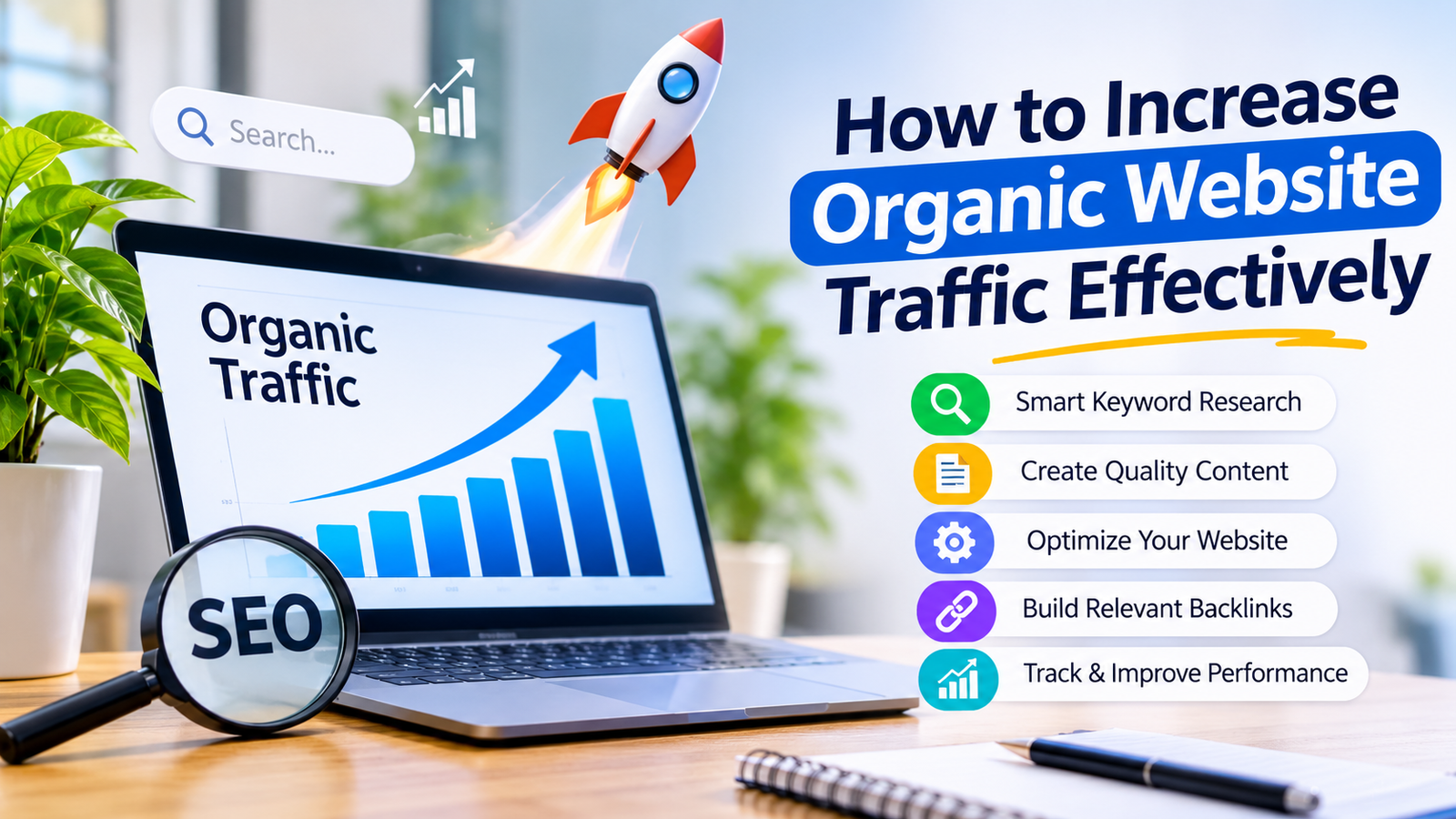
Organic website traffic plays an important role in building a successful online presence. It brings visitors to a website through unpaid search engine results and helps businesses reach people who are actively looking for relevant information, products, or services.
Unlike paid advertising, organic traffic focuses on long-term visibility. With the right SEO practices, businesses can improve their search rankings, attract relevant audiences, and generate consistent website visits.
In this guide, we will explore effective ways to increase organic website traffic and build a stronger digital presence.
1. Focus on Relevant Keyword Research
Keyword research is the foundation of a successful SEO strategy. It helps identify the search terms people use when looking for information related to your business.
Instead of targeting only highly competitive keywords, focus on relevant search phrases that match your website content and audience needs.
Helpful practices:
- Identify primary and secondary keywords.
- Research long-tail search queries.
- Understand search intent before creating content.
- Include keywords naturally in headings and paragraphs.
- Avoid unnecessary keyword repetition.
Choosing relevant keywords helps search engines understand your content and connect it with suitable searches.
2. Publish High-Quality and Useful Content
Content quality is one of the most important factors in attracting organic visitors. Websites that provide useful, informative, and relevant content have better opportunities to meet user expectations.
Create content that answers common questions, explains important topics, and solves problems faced by your target audience.
Consider publishing:
- Informative blog articles.
- Step-by-step tutorials.
- Industry-related guides.
- Frequently asked questions.
- Educational resources and case studies.
Keep your content original, easy to understand, and updated when information changes.
3. Optimize Website Pages for Search Engines
On-page SEO helps search engines understand the purpose and relevance of individual website pages.
Each important page should have a clear structure and properly optimized elements.
Important on-page SEO practices include:
- Write unique SEO titles and meta descriptions.
- Use descriptive H1, H2, and H3 headings.
- Include relevant keywords naturally.
- Add descriptive image alt text.
- Create clear and readable URLs.
- Use internal links to connect related pages.
Proper optimization improves content organization and makes it easier for visitors to navigate your website.
4. Improve Website Loading Speed
Website performance directly affects the browsing experience. Visitors may leave a website when pages take too long to load, especially on mobile devices.
To improve website speed:
- Compress large image files.
- Use browser caching where appropriate.
- Minimize unnecessary scripts and CSS.
- Choose reliable website hosting.
- Optimize website code.
- Use a content delivery network when beneficial.
Regular performance checks can help identify technical issues that affect website usability.
5. Make Your Website Mobile-Friendly
Many people access websites through smartphones and tablets. A mobile-friendly website makes it easier for visitors to read content, navigate pages, and interact with website features.
Ensure that your website:
- Uses a responsive design.
- Displays readable text on smaller screens.
- Has properly sized buttons and navigation.
- Loads efficiently on mobile networks.
- Avoids horizontal scrolling.
A positive mobile experience supports usability and helps search engines understand that your website works across different devices.
6. Create a Strong Internal Linking Structure
Internal linking connects different pages within the same website. It helps visitors discover related information and allows search engines to understand the relationship between your website pages.
For example, an article about website performance can link naturally to related articles about technical improvements, website development, and digital growth.
Internal linking tips:
- Use descriptive anchor text.
- Link only to relevant pages.
- Avoid excessive links in a single paragraph.
- Connect supporting blogs with important service pages.
- Check for broken internal links.
A well-planned internal linking structure improves website navigation and supports content discovery.
7. Build Relevant and Quality Backlinks
Backlinks are links from other websites pointing to your website. Relevant backlinks can help search engines discover your content and understand its position within a particular subject area.
Focus on earning links from trustworthy and relevant websites rather than collecting large numbers of low-quality links.
Some useful approaches include:
- Publishing informative guest articles.
- Creating original research and useful resources.
- Building relationships with industry publishers.
- Sharing valuable educational content.
- Contributing meaningful insights to relevant communities.
Avoid paid link schemes, automated link building, and excessive link exchanges that violate search engine spam policies.
8. Optimize Images for Better Search Visibility
Images make website content more engaging and help explain complex topics. However, poorly optimized images can affect loading performance.
Follow these image optimization practices:
- Use descriptive image file names.
- Add meaningful alt text.
- Compress images without sacrificing quality.
- Choose appropriate image formats.
- Use responsive images where possible.
Image optimization supports website accessibility and helps search engines understand visual content.
9. Update Existing Website Content Regularly
Publishing new articles is useful, but maintaining existing content is equally important.
Older pages may contain outdated information, broken links, missing details, or outdated statistics. Reviewing these pages helps maintain their relevance and usefulness.
Regularly:
- Update outdated information.
- Improve unclear explanations.
- Add relevant supporting sections.
- Replace broken links.
- Review titles and meta descriptions.
- Check whether the content still matches search intent.
Focus on meaningful improvements rather than changing publication dates without updating the content.
10. Monitor Website Performance Using SEO Tools
Tracking website performance helps identify what is working and where improvements are needed.
Google Search Console can help website owners understand search impressions, clicks, queries, indexing issues, and page performance.
Google Analytics can provide insights into website visitors, traffic sources, and user engagement.
Monitor important indicators such as:
- Organic clicks and impressions.
- Search query performance.
- Average search position.
- Landing page traffic.
- Website engagement.
- Technical indexing issues.
Use these insights to improve your content and SEO strategy over time.
11. Improve Search Intent and User Experience
Creating content around a keyword is not enough. Your page should satisfy the reason behind the user's search.
For example, someone searching for website traffic improvement techniques generally wants practical advice rather than a direct sales pitch.
Understand whether visitors are looking for information, comparisons, instructions, or professional assistance.
Make your pages helpful by using:
- Clear explanations.
- Relevant examples.
- Descriptive headings.
- Easy-to-follow formatting.
- Useful internal resources.
- Clear navigation.
When content meets user expectations, visitors can find the information they need more easily.
12. Maintain a Consistent SEO Strategy
Organic growth requires continuous attention. Search engine algorithms, user expectations, and industry trends change over time.
Develop a practical SEO plan that includes regular content publishing, technical website checks, keyword research, and performance analysis.
Businesses can also explore professional digital growth strategies to improve their online presence and build a structured approach to search visibility.
For additional information about search optimization and website visibility, explore SEO solutions by Webthropic.
Conclusion
Increasing organic website traffic requires a combination of quality content, relevant keyword research, technical optimization, internal linking, and trustworthy backlinks.
Businesses should focus on providing useful information, improving website performance, and regularly monitoring search results. Rather than expecting immediate results, maintain a consistent SEO strategy and make improvements based on actual website performance.
With the right approach, organic search can become a valuable long-term source of relevant website visitors and business opportunities.
Frequently Asked Questions (FAQs)
1. What is organic website traffic?
Organic website traffic refers to visitors who reach a website through unpaid search engine results.
2. How can I increase organic website traffic?
You can improve organic traffic through keyword research, quality content, on-page SEO, technical optimization, and relevant backlinks.
3. How long does SEO take to increase website traffic?
SEO results vary depending on competition, website condition, content quality, and optimization efforts. Meaningful improvements can take several months.
4. Are backlinks important for organic traffic?
Relevant and trustworthy backlinks can support search visibility, help search engines discover pages, and build website authority.
5. Does website speed affect SEO?
Website speed contributes to user experience and is part of Google's page experience considerations.
6. Why is keyword research important?
Keyword research helps identify what people search for and guides the creation of relevant website content.
7. Can blogging help increase organic traffic?
Yes. Helpful blog articles can target relevant search queries, answer user questions, and create additional opportunities to appear in search results.
8. What is on-page SEO?
On-page SEO involves optimizing page titles, headings, content, images, URLs, and internal links to improve page relevance and usability.
9. How can I track organic website traffic?
Google Analytics and Google Search Console are useful tools for monitoring website visits and organic search performance.
10. Is organic traffic better than paid traffic?
Both have different advantages. Organic traffic can provide sustainable long-term visibility, while paid traffic can generate visibility through advertising campaigns.