How to Choose the Best PPC Company in India: A Complete Guide
Tips to Compare PPC Agencies, Costs, and Advertising Results
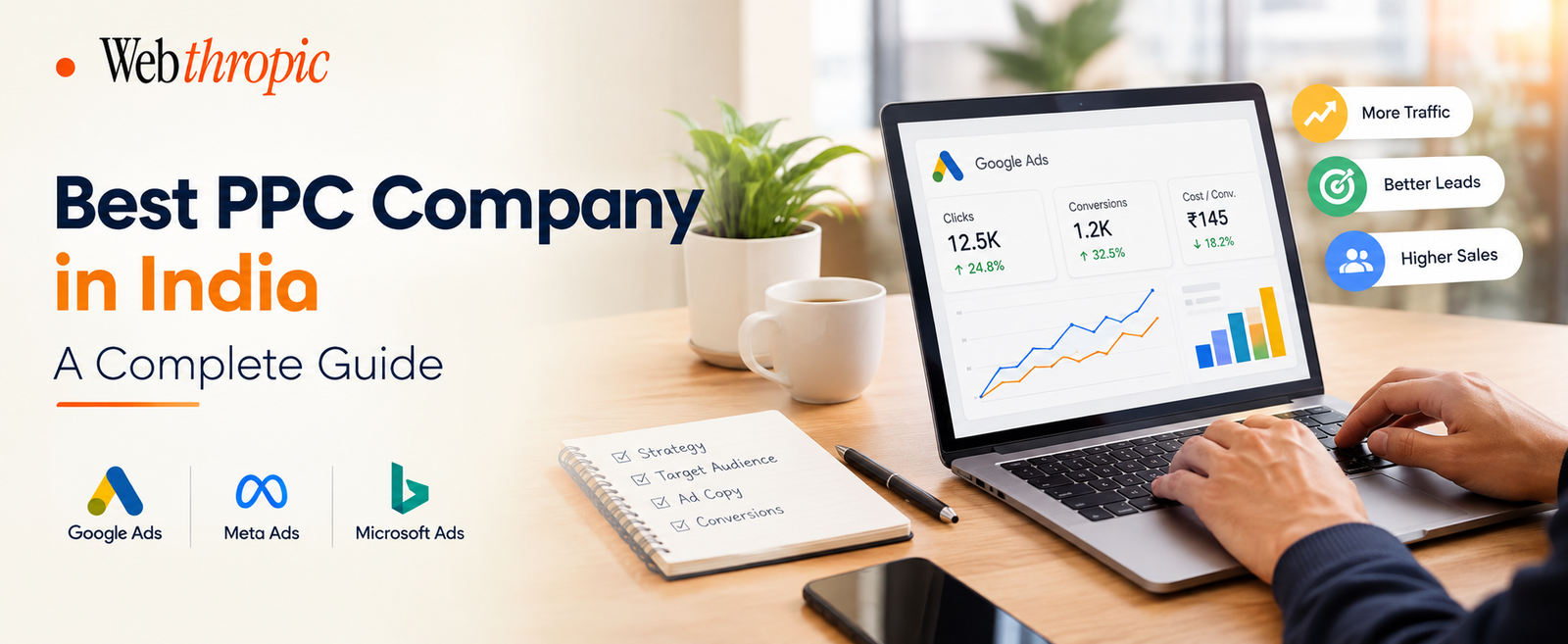
Spending money on ads but not getting enough leads or sales? The problem may not be your budget, but your advertising strategy. The right PPC approach helps businesses reach potential customers, reduce wasted spending, and improve campaign performance.
Choosing the best PPC company in India can help you turn advertising clicks into valuable business opportunities. In this guide, discover how PPC agencies work, which services to look for, how to compare costs, and how to choose the right partner for your business goals.
What Is PPC Advertising?
Pay-per-click advertising is an online advertising model in which advertisers generally pay when someone clicks on their advertisement. It allows businesses to reach users who are actively searching for products, services, or solutions, as well as audiences browsing relevant digital platforms.
For example, a company offering website development services may advertise for searches related to business website solutions. When a relevant user clicks the advertisement, they can be directed to a dedicated landing page where they can explore the service, request a quotation, or contact the business.
PPC advertising can support several business objectives, including:
- Generating qualified leads and enquiries.
- Increasing e-commerce sales.
- Promoting specific products or services.
- Reaching customers in selected cities or regions.
- Testing new markets and customer segments.
- Increasing brand visibility in competitive industries.
- Measuring advertising performance through conversion tracking.
The effectiveness of a PPC campaign depends on the relationship between the advertising objective, targeting strategy, budget, website experience, and quality of the offer.
Services to Look for When Comparing PPC Companies
Not every agency offers the same services. Before choosing a provider, evaluate whether its expertise matches your business goals and advertising requirements.
Google Ads Management
Google Ads management typically includes campaign setup, keyword research, ad creation, bidding strategy, budget monitoring, conversion tracking, and performance optimization.
Depending on the business model, campaigns may include Search, Display, Shopping, YouTube, or other available campaign types.
Search Advertising
Search advertising connects businesses with users who enter relevant queries into a search engine. It can be particularly useful for service providers, local businesses, B2B companies, and businesses selling products with clear search demand.
The agency should organize campaigns around user intent and ensure that advertisements lead to relevant landing pages.
E-commerce PPC Campaigns
Online stores may use Shopping campaigns, product feeds, search campaigns, and other advertising formats to promote their catalogs.
An experienced e-commerce advertising partner should understand product data quality, product categorization, conversion tracking, profitability, and the relationship between advertising costs and order value.
Social Media Advertising
Depending on the agency's expertise, services may include paid advertising on Facebook, Instagram, and other social platforms. These campaigns can help businesses generate demand, reach specific audiences, promote offers, and retarget eligible website visitors.
Social advertising requires creative testing and audience strategy in addition to budget management.
Landing Page Optimization
A well-targeted advertisement may still underperform if the landing page is slow, confusing, or unrelated to the advertised offer.
Landing page optimization can include improving page speed, simplifying forms, clarifying service benefits, strengthening calls to action, and ensuring a smooth mobile experience.
Remarketing and Audience Targeting
Remarketing helps businesses reconnect with eligible users who have previously interacted with their website, app, or other marketing assets, subject to platform rules and applicable consent requirements.
Audience strategies should respect privacy requirements and focus on relevant customer segments.
Reporting and Performance Analysis
A professional agency should provide understandable reports that connect advertising activity with business outcomes. Reporting may include spending, clicks, conversions, cost per conversion, lead quality, revenue, and return on ad spend when reliable data is available.
How to Identify the Best PPC Company in India
- Review Industry Experience: Choose an agency familiar with your industry and target audience.
- Check Case Studies: Look for measurable results and relevant campaign examples.
- Evaluate Strategy: Ensure the agency offers a customized plan based on your business goals.
- Verify Tracking Skills: Confirm expertise in conversion tracking and analytics.
- Assess Communication: Look for transparent reporting and regular updates.
- Confirm Account Ownership: Keep ownership of your advertising accounts and campaign data.
- Compare Pricing: Review management fees, included services, and additional costs before signing a contract.
Understanding PPC Agency Pricing in India
PPC management pricing varies according to campaign complexity, advertising spend, business objectives, number of platforms, and the level of support required.
Common pricing models include:
- Fixed monthly fee: A predetermined amount for agreed management services.
- Percentage of ad spend: A management fee calculated using advertising expenditure.
- Project-based pricing: A one-time fee for campaign setup, audits, tracking implementation, or account restructuring.
- Performance-based arrangements: Fees linked to agreed performance measures, subject to clearly defined terms.
Important PPC Metrics Every Business Should Understand
Understanding campaign metrics helps you evaluate whether an agency is delivering meaningful progress.
- Click-Through Rate (CTR): Measures how often people click your ads after seeing them.
- Cost Per Click (CPC): Shows the average cost of each ad click.
- Conversion Rate: Tracks how many users complete a desired action.
- Cost Per Lead (CPL): Measures the average cost of generating one lead.
- Customer Acquisition Cost (CAC): Calculates the cost of acquiring a customer.
- Return on Ad Spend (ROAS): Measures the revenue generated for every rupee spent on advertising.
Common Mistakes to Avoid When Hiring a PPC Agency
Choosing an advertising partner without sufficient evaluation can result in wasted spending and poor campaign decisions. Avoid these common mistakes:
Focusing only on clicks: Traffic matters, but qualified enquiries, sales, and profitability are often more meaningful outcomes.
Expecting guaranteed results: Advertising performance depends on competition, demand, budget, pricing, website quality, and numerous other factors. No agency can responsibly guarantee a specific outcome in every situation.
Ignoring landing pages: Sending all visitors to a generic homepage can weaken the connection between search intent and the advertised offer.
Overlooking tracking: Inaccurate conversion data can lead to poor optimization decisions and unreliable reporting.
Choosing solely on price: Very low fees may not cover the level of research, monitoring, analysis, and communication your campaigns require.
Failing to define objectives: Without agreed goals, it becomes difficult to evaluate campaign performance objectively.
Neglecting lead quality: Businesses that rely on enquiries should connect advertising data with sales outcomes whenever practical.
How PPC Advertising Can Support Long-Term Business Growth
PPC advertising can contribute to a broader digital marketing strategy when it is connected with website optimization, analytics, and customer acquisition planning.
Search campaigns can help capture existing demand, while social campaigns can introduce products or services to relevant audiences. Remarketing may support follow-up engagement, and conversion analysis can help businesses identify weaknesses in their customer journey.
PPC data can also reveal valuable insights about customer search behavior, audience preferences, product interest, and the messages that encourage action.
However, paid advertising works best when businesses continuously improve their offers, website experience, sales follow-up, and measurement processes. Campaign management should be viewed as an ongoing cycle of testing, learning, and refinement rather than a one-time setup.
Conclusion
Choosing the best PPC company in India means finding an agency that understands your business goals, manages your advertising budget effectively, and focuses on measurable results. Compare experience, services, pricing, and reporting before making a decision.
With the right PPC partner and continuous optimization, your business can attract quality leads, increase conversions, and achieve sustainable growth.
Frequently Asked Questions
1. What does a PPC company do?
A PPC company plans, launches, manages, and optimizes paid advertising campaigns. Its services may include keyword research, ad creation, budget management, conversion tracking, landing page recommendations, and performance reporting.
2. How do I choose the best PPC company in India?
Evaluate relevant experience, case studies, campaign strategy, tracking expertise, reporting quality, pricing transparency, communication, and account ownership. Choose a provider that understands your specific business goals.
3. How much does PPC management cost in India?
Costs vary according to advertising spend, campaign complexity, platforms, and the agency's services. Ask for a proposal that separates advertising expenditure from management fees and additional implementation costs.
4. Which platforms do PPC agencies manage?
Depending on their expertise, agencies may manage Google Ads, Microsoft Advertising, Meta Ads, LinkedIn Ads, and other paid advertising platforms.
5. How long does it take to see PPC results?
Campaigns may begin generating clicks soon after launch, but meaningful performance evaluation usually requires sufficient conversion data and time to test and optimize the strategy. The timeline depends on budget, demand, competition, sales cycles, and tracking quality.
6. Is PPC suitable for small businesses?
Yes. Small businesses can use PPC to target specific locations, services, products, and customer segments. The key is to establish a realistic budget, define valuable conversions, and monitor performance carefully.
7. What is the difference between PPC and SEO?
PPC uses paid placements to reach audiences through advertising platforms, while SEO focuses on improving a website's visibility in organic search results. Both can contribute to a broader digital marketing strategy, but their costs, timelines, and measurement methods differ.