Why Email Marketing Is Still the Smartest Way to Get More Leads and Sales
Learn how email marketing software, automation, and drip campaigns can turn subscribers into paying customers.
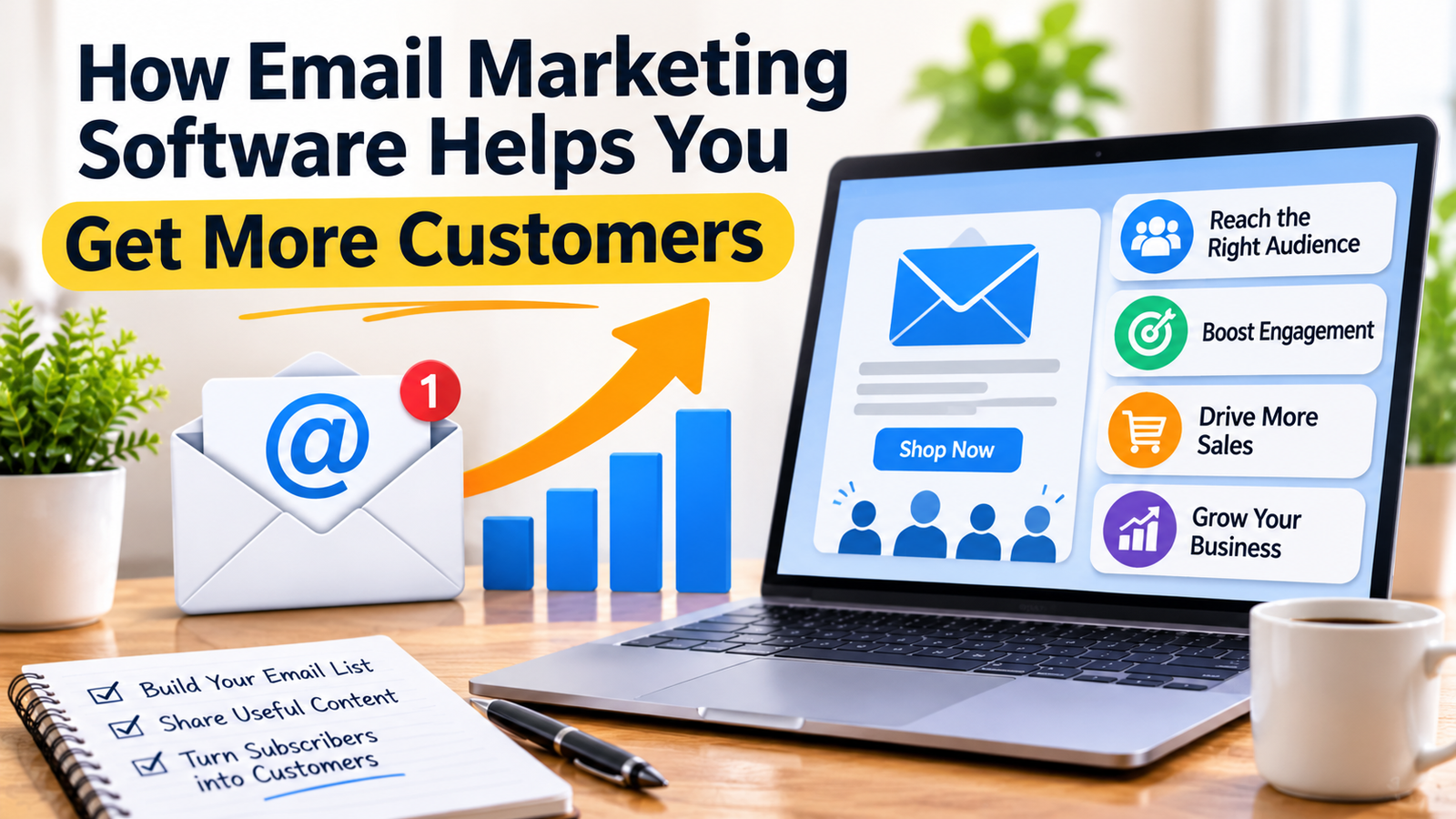
Every few years, someone declares that email is dead. And every few years, email quietly keeps making money for the businesses that use it well.
Here’s why. When someone gives you their email address, they are giving you permission to talk to them. You don’t rent that audience from a social media algorithm. You own the list. You can send an offer, a tip, or a reminder directly to a person who already showed interest in what you do.
If you run a small business, a startup, an online store, or an agency, email marketing is one of the most reliable ways to generate leads and turn them into customers. This guide explains how it works, which tools to consider, and how to start without wasting money. We’ll also answer 20 common questions at the end.
Email Marketing: What It Is and Why It Still Works in 2026
Email marketing means sending messages to people who have agreed to hear from you, with the goal of building relationships and driving sales. Those messages can be newsletters, welcome emails, product offers, order updates, or follow-ups after a purchase.
It still works for a few simple reasons:
- You own your list. If a social platform changes its rules, your reach can vanish overnight. Your email list stays yours.
- It’s personal. An email lands in someone’s inbox, a space they check daily.
- It’s measurable. You can see who opened, who clicked, and who bought.
- It’s affordable. Even a small budget can reach thousands of people.
Think of email as the place where casual interest becomes a real conversation.
Email Marketing Software: What It Does and Why You Need It
You could technically send marketing emails from your regular inbox, but it falls apart fast. You can’t track results, manage unsubscribes, or send to hundreds of people without landing in spam.
Email marketing software solves this. It lets you store contacts, design emails, schedule campaigns, automate follow-ups, and see what’s working. It also handles unsubscribe links and consent, which keeps you on the right side of the law.
If you’re sending more than a handful of emails a month, dedicated software isn’t a luxury. It’s the foundation.
Need help choosing and setting up the right tool? Our email marketing services take care of it for you.
Email Marketing Platforms: How to Choose the Right One for Your Business
There are dozens of email marketing platforms, and the “best” one depends on your situation. Instead of chasing the most popular name, ask these questions:
- What’s my budget? Some platforms have free plans, while others charge by contact count.
- How big is my list? Costs usually rise as your list grows.
- Do I need automation? If yes, check how advanced the workflows are.
- Does it connect to my other tools? Your website, CRM, and online store should plug in easily.
- Is it easy to use? If your team hates the tool, they won’t use it.
Well-known options include Mailchimp, HubSpot, Zoho Campaigns, MailerLite, Klaviyo, and ConvertKit. Each has strengths. Klaviyo is popular with online stores, HubSpot suits teams that want email tied to a full CRM, and MailerLite is often praised for simplicity. Always check current features and pricing on each provider’s website, since plans change.
Free Email Marketing Tools: Where to Start When Your Budget Is Tight
If you’re just starting, free email marketing tools are a smart way to learn without risk. Several platforms, including Mailchimp, MailerLite, and Zoho, have offered limited free plans, usually capped by the number of contacts or monthly sends.
A free plan is great for:
- Testing your first newsletter
- Building your first 500 to 1,000 subscribers
- Learning what your audience responds to
The trade-off is that free plans often limit automation, templates, or support. When your list grows and you need more power, you can upgrade. Don’t pay for features you won’t use in the first three months.
Best Email Marketing Platforms for Small Business Owners
Small business owners need three things: simplicity, fair pricing, and good support. You probably don’t have a marketing team, so the platform should do the heavy lifting.
Look for drag-and-drop email builders, ready-made templates, basic automation, and clear reports. A small bakery, a local clinic, or a freelance designer doesn’t need enterprise tools. They need a way to send a monthly update, a welcome email, and the occasional offer.
Start with the simplest tool that meets your needs. You can always move later, and most platforms let you export your contacts.
Email Automation: Let Your Emails Work While You Sleep
Email automation is where email marketing gets really powerful. Instead of sending everything by hand, you set up rules that trigger messages automatically.
For example:
- Someone signs up, and a welcome email goes out instantly.
- A customer abandons their cart, and a reminder arrives a few hours later.
- A buyer receives a thank-you note, then a review request a week after.
Once built, these emails run in the background. You set them up once and they keep nurturing leads around the clock. Automated email marketing is often the single biggest time-saver for busy business owners.
Email Automation Software and Tools: Features Worth Paying For
When comparing email automation software, don’t get distracted by long feature lists. Focus on the features that actually move the needle:
- Visual workflow builder: So you can map out journeys without coding.
- Segmentation: Send different messages to different groups.
- Triggers: Start an email based on a click, signup, or purchase.
- A/B testing: Test subject lines and see what wins.
- Reporting: Know your open rates, click rates, and conversions.
Good email automation tools should feel like a helpful assistant, not a puzzle. Try the free trial before committing.
Drip Campaign: How to Nurture Leads Step by Step
A drip campaign is a series of emails sent over time, usually triggered by an action like signing up. Rather than pushing a sale on day one, you build trust gradually.
A simple five-email drip might look like this:
- Day 0: Welcome and a quick intro to who you are.
- Day 2: A helpful tip or guide related to their interest.
- Day 5: A customer story or case study.
- Day 8: A soft offer or invitation to book a call.
- Day 12: A last reminder with a clear call to action.
A drip email campaign works because it respects the buyer’s pace. Most people aren’t ready to buy the moment they join your list.
Email Marketing Campaign: A Simple Plan You Can Follow
Running a successful email marketing campaign doesn’t require a complicated strategy. Follow this basic structure:
- Set one goal. Sales, bookings, downloads, or event signups.
- Pick your audience. Don’t send everything to everyone.
- Write a clear subject line. Curiosity and clarity beat cleverness.
- Keep the body focused. One message, one call to action.
- Test before sending. Check links, spelling, and how it looks on mobile.
- Review the results. Learn from every send.
Small, consistent campaigns beat occasional big ones. Showing up regularly builds familiarity and trust.
Email Marketing Templates: Save Time Without Looking Generic
Email marketing templates and email campaign templates save hours, especially if you’re not a designer. Most platforms include dozens, from newsletters to promotions to event invitations.
But there’s a catch. If you send a template with no changes, it can look like everyone else’s email. Add your logo, brand colors, and a real voice. Replace stock text with words that sound like you. A template is a starting point, not a finished product.
Also keep your design simple. Clean layouts, short paragraphs, and one clear button usually outperform cluttered designs.
Email Marketing Design: Make Your Emails Easy to Read and Click
Good email marketing design is about making things easy for the reader. Most people open emails on their phones, often while doing something else.
Keep these basics in mind:
- Use a single-column layout that works on small screens.
- Write short paragraphs of two to three lines.
- Use one clear call-to-action button.
- Keep images light so the email loads fast.
- Make sure the text is readable even if images are blocked.
If someone has to squint, pinch, or hunt for the button, you’ll lose them.
Email Marketing Content: What to Write So People Actually Read
Great email marketing content sounds like a person wrote it, not a committee. Write the way you’d talk to a customer sitting across from you.
Ideas for content that works:
- Helpful tips related to your product or service
- Behind-the-scenes stories
- Customer success stories
- Answers to common questions
- Time-limited offers (only when they’re real)
Every email should answer one question from the reader’s side: “What’s in it for me?” If the answer isn’t clear in the first two lines, rewrite it.
Email Marketing Lists: How to Grow a List of Real, Interested Subscribers
Your list is your most valuable asset, so build it the right way. Real subscribers who opted in will always outperform a big list of strangers.
Proven ways to grow your list:
- Add a signup form to your website, blog, and footer.
- Offer a lead magnet such as a checklist, template, or discount.
- Use pop-ups carefully, timed so they don’t annoy visitors.
- Collect emails at events, in-store, or during checkout (with permission).
- Promote your newsletter on social media.
Be cautious about buying lists or searching for free email lists for marketing. People on those lists never agreed to hear from you, which leads to spam complaints, poor deliverability, and possible legal trouble. Quality always beats quantity.
Email Marketing Lead Generation: Turning Subscribers Into Customers
Email marketing lead generation is about guiding people from “just browsing” to “ready to buy.” It works best when you combine a strong offer, a smooth signup process, and helpful follow-ups.
Here’s a simple flow:
- A visitor downloads a free guide in exchange for an email.
- A welcome email delivers the guide and introduces your brand.
- A drip sequence shares tips and builds trust.
- A targeted offer invites them to take the next step.
Track which emails get clicks and replies, then double down on those. Over time, you’ll learn exactly what your audience wants.
A conversion-focused website makes it much easier to capture subscribers in the first place.
Email Marketing for Ecommerce: Recover Sales and Build Loyalty
Email marketing for ecommerce is a goldmine because you already know what customers browse and buy. Platforms like Klaviyo and Shopify Email are built around this.
Key emails every online store should have:
- Welcome series: Introduce your brand and offer a first-purchase incentive.
- Abandoned cart emails: Gently remind shoppers what they left behind.
- Post-purchase emails: Thank them, confirm shipping, and ask for a review.
- Win-back emails: Re-engage customers who haven’t bought in a while.
- Product recommendations: Suggest items based on past orders.
These emails often drive a big share of an online store’s repeat revenue.
Running an online store? See how our ecommerce website development works with email marketing
B2B Email Marketing: Build Trust Before You Pitch
B2B email marketing is different from selling to consumers. The buying cycle is longer, more people are involved, and trust matters more than flashy offers.
Focus on being useful. Share industry insights, case studies, how-to guides, and honest advice. Personalize where you can, such as mentioning the person’s industry or role. Keep emails short and professional, and make the next step easy, like booking a quick call.
Avoid sending cold, copy-pasted messages. If you do outreach, use cold email tools responsibly, follow anti-spam laws, and always offer an easy way to opt out.
AI Email Marketing: Work Smarter Without Losing the Human Touch
AI email marketing tools can help you write subject lines, suggest send times, segment audiences, and draft email copy. They’re great for speeding up routine work and getting past the blank page.
But don’t hand over your voice completely. Readers can spot generic, robotic emails quickly. Use AI to brainstorm and polish, then add your own stories, examples, and personality. The best results come from combining AI’s speed with human judgment.
Bulk Email Marketing and Mass Email Software: Send at Scale the Safe Way
Bulk email marketing software and mass email software let you send to thousands of subscribers at once. This is useful, but it comes with responsibility.
To protect your sender reputation:
- Only email people who opted in.
- Include a visible unsubscribe link.
- Use a verified sending domain.
- Clean your list regularly by removing inactive contacts.
- Avoid spammy words and excessive links.
Free mass email sender tools can be tempting, but many have strict limits or poor deliverability. If email is important to your business, a reputable provider is worth the investment.
Email Marketing Agency vs Doing It Yourself: Which Is Right for You?
An email marketing agency or email marketing company can handle strategy, design, copywriting, and reporting. This makes sense if you’re short on time, want expert guidance, or need to scale quickly.
Doing it yourself works well when you’re starting out, your list is small, and you enjoy learning. Many businesses begin on their own and bring in help later. If you hire, ask to see past results, understand their pricing, and make sure they follow consent rules.
Email Marketing Strategy: A Practical Checklist to Get Started
Ready to begin? Here’s a simple checklist:
- Choose an email marketing platform that fits your budget.
- Add signup forms to your website.
- Create a lead magnet people actually want.
- Set up a welcome email or short drip campaign.
- Send a regular newsletter, even if it’s monthly.
- Segment your list as it grows.
- Test subject lines and send times.
- Review your reports and improve.
Start small. A simple, consistent system beats a perfect plan you never launch.
Conclusion: Start Email Marketing Today and Own Your Audience
Email marketing isn’t flashy, but it works. It gives you a direct line to people who want to hear from you, it costs less than most paid channels, and it keeps getting better as you learn.
Pick a platform, build your list the honest way, and send helpful messages regularly. Add automation and drip campaigns as you grow, and keep refining based on results.
Ready to turn subscribers into customers? Contact us today for a free consultation and let’s build your email marketing system together.
Want to reach customers beyond the inbox? Read our guide on why WhatsApp marketing is the fastest way to get more leads.
Frequently Asked Questions (FAQs)
1. What is email marketing?
It’s the practice of sending promotional and helpful emails to people who’ve agreed to hear from you, with the goal of building relationships and driving sales.
2. Is email marketing still effective in 2026?
Yes. It remains one of the most reliable channels because you own your list and can reach customers directly.
3. What is email marketing software?
It’s a tool that helps you manage contacts, design emails, schedule campaigns, automate messages, and track results.
4. What are the best email marketing platforms?
Popular options include Mailchimp, HubSpot, Zoho Campaigns, MailerLite, Klaviyo, and ConvertKit. The best one depends on your budget, list size, and needs.
5. Are there free email marketing tools?
Yes. Several platforms offer limited free plans, usually capped by contact count or monthly emails. Check each provider for current limits.
6. Which email marketing platform is best for small businesses?
Look for one that is easy to use, fairly priced, and includes templates and basic automation. Many small businesses start with Mailchimp, MailerLite, or Zoho.
7. What is email automation?
It’s the use of triggers to send emails automatically, such as a welcome message after signup or a reminder for an abandoned cart.
8. What is a drip campaign?
A drip campaign is a series of pre-written emails sent over time to nurture leads and guide them toward a purchase.
9. How do I build an email list?
Add signup forms to your website, offer a lead magnet, collect emails at checkout or events, and promote your newsletter on social media.
10. Can I buy email lists for marketing?
It’s not recommended. Purchased lists contain people who never opted in, which hurts deliverability and may break privacy laws.
11. How often should I send marketing emails?
It depends on your audience, but a consistent schedule such as weekly or twice a month works for most businesses. Quality matters more than frequency.
12. What makes a good email subject line?
It’s clear, short, and gives the reader a reason to open. Avoid misleading claims and excessive punctuation.
13. What is B2B email marketing?
It’s email marketing aimed at businesses rather than individual consumers, focused on building trust through useful content and relevant outreach.
14. How does email marketing work for ecommerce?
It helps online stores send welcome offers, abandoned cart reminders, order updates, and product recommendations to drive repeat sales.
15. Can AI help with email marketing?
Yes. AI can help write subject lines, draft copy, segment audiences, and suggest send times. Always review and add a human touch.
16. What is the difference between email marketing and bulk email?
Email marketing focuses on permission-based, relevant communication. Bulk email simply means sending to many people at once, which should still be done with consent.
17. How do I avoid the spam folder?
Use a verified domain, send only to opted-in contacts, include an unsubscribe link, keep your list clean, and avoid spammy wording.
18. Do I need permission to send marketing emails?
Yes. In most regions, laws require consent and a clear way to unsubscribe. Check the rules that apply in your country.
19. Should I hire an email marketing agency?
It’s a good option if you lack time or expertise. If you’re just starting and your list is small, you can begin on your own.
20. How do I measure email marketing success?
Track open rate, click rate, conversions, unsubscribe rate, and revenue from each campaign, then use the data to improve.