How Meta Ads Help eCommerce Stores Grow Their Online Presence
A practical guide to using Meta advertising to increase product visibility, attract potential customers, and support eCommerce sales.
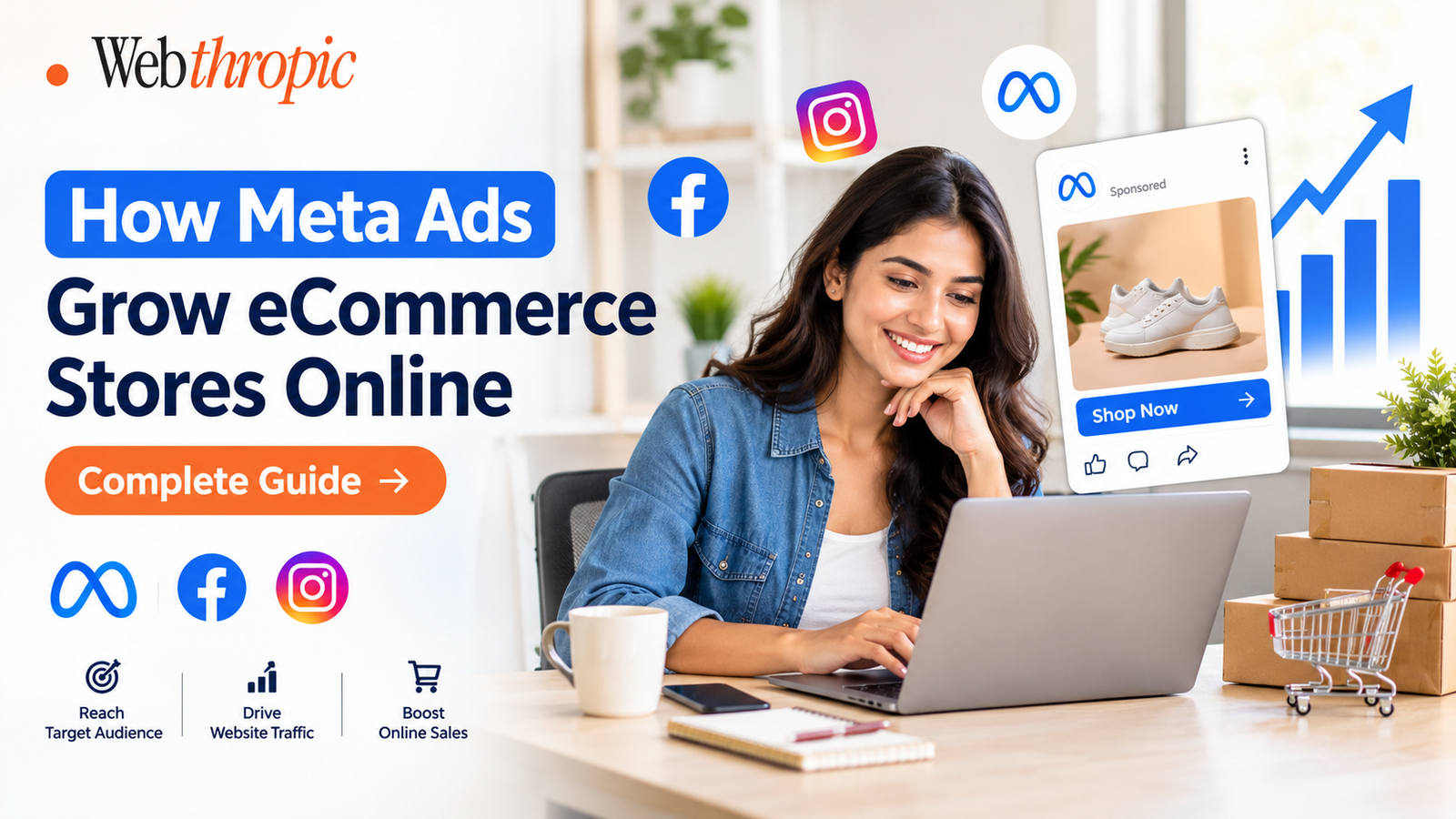
Running an eCommerce store involves more than listing products on a website. Businesses must attract potential customers, build brand awareness, communicate product value, and encourage people to make purchases. With countless online stores competing for attention, reaching the right audience has become an important part of digital marketing.
Meta Ads offer businesses a way to promote products and connect with potential buyers across Facebook, Instagram, Messenger, and other placements supported by Meta. With suitable targeting, engaging creatives, and ongoing campaign optimization, businesses can improve their online visibility and create more opportunities for sales.
In this guide, we will explore how Meta Ads work, why they matter for eCommerce businesses, and which strategies can help online retailers improve advertising performance.
What Are Meta Ads?
Meta Ads are paid advertising campaigns managed through Meta's advertising platform. Businesses can use them to promote products, increase brand awareness, attract website visitors, generate leads, and encourage purchases.
Unlike organic social media posts, which depend on unpaid distribution, advertisements allow businesses to reach selected audiences according to campaign objectives, audience settings, placements, and available delivery signals.
Common advertising formats include:
- Image Ads: Display individual products, promotional offers, or brand messages through attractive visuals.
- Video Ads: Demonstrate how a product works, explain its benefits, or show it in everyday use.
- Carousel Ads: Present several products or features within a single advertisement.
- Collection Ads: Help shoppers explore products through a mobile-friendly shopping experience.
- Reels and Stories Ads: Use vertical creative formats to capture attention while users browse short-form content.
- Retargeting Ads: Re-engage eligible audiences who previously interacted with a business or its website.
The right format depends on the product, target audience, advertising objective, and available creative assets.
Why eCommerce Businesses Should Consider Meta Ads
A well-designed online store cannot guarantee a steady flow of visitors or customers. Advertising can help businesses introduce their products to new audiences and reconnect with people who have already shown interest.
1. Increase Brand Awareness
New online stores often struggle because potential customers have never heard of them. Meta Ads can introduce a brand to relevant audiences through product demonstrations, lifestyle images, short videos, and informative promotional content.
For example, a business selling handmade home decor can showcase how its products look in different rooms. Such advertisements help people understand the brand's style and discover products they might not find through direct searches.
Consistent exposure can improve brand recognition, although results depend on audience relevance, creative quality, frequency, and campaign delivery.
2. Reach Relevant Potential Customers
Audience targeting helps advertisers focus on people who may be interested in their products. Campaign settings can include location, age, language, and other available audience options. Meta's delivery systems may also use permitted signals to find people likely to take the desired action.
An online clothing store, for instance, can promote seasonal collections in selected markets and use performance data to improve its campaigns.
Businesses should avoid making audiences unnecessarily narrow. Testing broader audiences alongside more specific groups can reveal which approach delivers better results.
3. Drive Qualified Website Traffic
Getting visitors to a website is useful only when those visitors have a reasonable chance of engaging with the business. Product-focused advertisements can communicate important information before someone clicks.
Effective creatives should make the following details easy to understand:
- What the product is.
- Which problem it addresses or need it fulfills.
- What makes it different.
- Where customers can learn more or purchase it.
Relevant landing pages, clear product descriptions, transparent pricing, and a smooth mobile experience can help turn advertising clicks into meaningful visits.
4. Support More Online Purchases
Meta Ads can support sales campaigns by optimizing delivery toward purchase-related outcomes when sufficient data and suitable tracking are available.
An eCommerce business can test different product images, offers, headlines, and landing pages to identify which combinations encourage customers to complete purchases.
However, advertising does not guarantee sales. Product demand, pricing, customer reviews, delivery costs, payment options, and website usability also influence buying decisions.
How Meta Ads Work for an eCommerce Store
Understanding the campaign process helps businesses make more informed advertising decisions.
Step 1: Choose a Clear Campaign Objective
Before launching an advertisement, determine what the business wants to achieve.
Common objectives include awareness, traffic, engagement, leads, and sales. For an online store seeking purchases, a sales-oriented campaign may be appropriate. A new brand that first needs to introduce its products to customers might begin with an awareness-focused approach.
The objective should match the intended business outcome rather than simply generating the highest number of clicks or likes.
Step 2: Define Your Target Audience
Consider who is most likely to need or purchase your products. Relevant factors may include location, customer interests, previous interactions, shopping preferences, and other permitted advertising signals.
Depending on the campaign setup and available data, businesses can test different audience approaches:
- New audience acquisition: Reach people who have not previously interacted with the brand.
- Custom audiences: Reconnect with eligible people who have engaged with the business or its content.
- Lookalike audiences: Reach new people who share characteristics with an eligible source audience, where this feature is available.
Audience selection should be guided by actual customer information and campaign results rather than assumptions alone.
Step 3: Create Compelling Ad Creatives
The advertisement is often the first interaction a potential customer has with a product. Clear visuals and relevant messaging help communicate value quickly.
For stronger creative performance:
- Use sharp, high-quality product images.
- Demonstrate the product in real-life situations.
- Highlight genuine benefits and relevant features.
- Keep headlines short and easy to understand.
- Include a clear call to action, such as "Shop Now" or "Explore Products."
- Adapt creative assets for mobile placements.
For example, a skincare retailer might create a short video explaining how to use a product, accompanied by accurate ingredient information and a link to the relevant product page.
Testing several creative concepts can reveal which messages resonate with the intended audience.
Step 4: Set Your Budget and Bidding Strategy
Your advertising budget should reflect your business goals, margins, available cash flow, and ability to fulfill orders.
Start with a controlled testing budget that allows you to compare meaningful variations without risking more than the business can afford. There is no universal daily budget that guarantees successful results for every store.
Monitor spending against outcomes such as purchases, cost per acquisition, and return on ad spend. Increase budgets gradually when a campaign demonstrates sustainable performance.
Step 5: Configure Conversion Tracking
Tracking helps businesses understand what happens after people interact with their advertisements.
Depending on the website and advertising setup, businesses may use the Meta Pixel and the Conversions API to measure relevant events. These tools can help report actions such as product views, add-to-cart events, checkout initiation, and purchases, subject to implementation, consent requirements, and platform policies.
Accurate event configuration is essential. Duplicate events, missing purchase values, or incorrect tracking can make campaign results difficult to interpret.
Businesses should also maintain appropriate privacy notices and comply with applicable data protection requirements.
Step 6: Monitor and Optimize Campaign Performance
Launching an advertisement is only the beginning. Regular analysis helps identify which campaigns deserve further investment and which need improvement.
Review relevant metrics, including:
- Reach and impressions: Understand how widely advertisements are being delivered.
- Click-through rate: Evaluate how often people click after seeing an advertisement.
- Cost per click: Measure the average cost of a click.
- Conversion rate: Assess how frequently visitors complete a desired action.
- Cost per acquisition: Calculate the advertising cost associated with acquiring a customer or conversion.
- Return on ad spend (ROAS): Compare attributed advertising revenue with advertising expenditure.
No single metric tells the complete story. A campaign with inexpensive clicks may still generate few purchases, while a campaign with a higher click cost could attract more valuable customers.
Improve the Website Before Increasing Ad Spend
Advertising may bring visitors to a website, but the website itself plays an important role in conversion.
Make sure your online store offers:
- Fast-loading pages and mobile-friendly navigation.
- Clear product images and descriptions.
- Transparent shipping fees and delivery estimates.
- Visible return and refund policies.
- Trusted and functional payment options.
- A simple checkout process.
- Accessible customer support information.
If visitors repeatedly abandon the website, investigate the underlying problem before increasing the advertising budget.
Common Meta Ads Mistakes to Avoid
Even a well-funded campaign can underperform when its basic elements are not aligned.
Targeting everyone without a clear strategy: Broad delivery can work in some situations, but businesses still need relevant messaging, a suitable objective, and reliable measurement.
Using low-quality creatives: Unclear images, excessive text, or vague product benefits can make advertisements less compelling.
Sending visitors to irrelevant pages: The landing page should match the product and promise shown in the advertisement.
Changing campaigns too frequently: Constant edits can make performance harder to evaluate. Make changes based on meaningful evidence.
Ignoring profitability: Revenue alone does not show whether a campaign is profitable. Consider product costs, shipping, payment fees, returns, and other expenses.
Expecting immediate results: Advertising requires testing, measurement, and ongoing refinement. Performance varies by market, product, season, and competition.
Avoiding these mistakes can help businesses use their budgets more thoughtfully and make better-informed marketing decisions.
Conclusion
Meta Ads can help eCommerce businesses introduce products to new audiences, increase online visibility, attract potential customers, and support online sales. Their effectiveness depends on more than launching a campaign: businesses need clear objectives, relevant creative content, suitable audience strategies, reliable tracking, and a website that makes shopping straightforward.
Start with a specific goal, test a manageable number of advertising variations, and evaluate performance using metrics that reflect your business objectives. Improve the customer experience alongside your advertising strategy, and scale campaigns only when the results justify additional investment.
With consistent testing and informed optimization, Meta Ads can become a valuable part of a broader eCommerce growth strategy.
Frequently Asked Questions
1. What are Meta Ads used for in eCommerce?
Meta Ads help online stores promote products, build brand awareness, attract website visitors, reconnect with interested shoppers, and generate purchases.
2. Are Meta Ads suitable for small eCommerce businesses?
Yes. Small businesses can begin with a budget appropriate to their financial capacity, test different creatives and audiences, and increase spending when results support further investment.
3. Do Meta Ads guarantee online sales?
No. Results depend on product demand, advertising quality, targeting, competition, website experience, pricing, and other factors.
4. What is the Meta Pixel?
The Meta Pixel is a website tracking tool that can help measure visitor actions and support advertising optimization. Businesses should configure it appropriately and follow applicable privacy requirements.
5. How long does it take to see results from Meta Ads?
The timeline varies according to the objective, budget, audience size, conversion volume, and product. Businesses should gather sufficient data before making major optimization decisions.
6. What is a good ROAS for an eCommerce advertising campaign?
There is no universal target. A suitable ROAS depends on product margins, operating expenses, customer lifetime value, and other business costs. Calculate the break-even point before deciding whether a campaign is financially sustainable.